
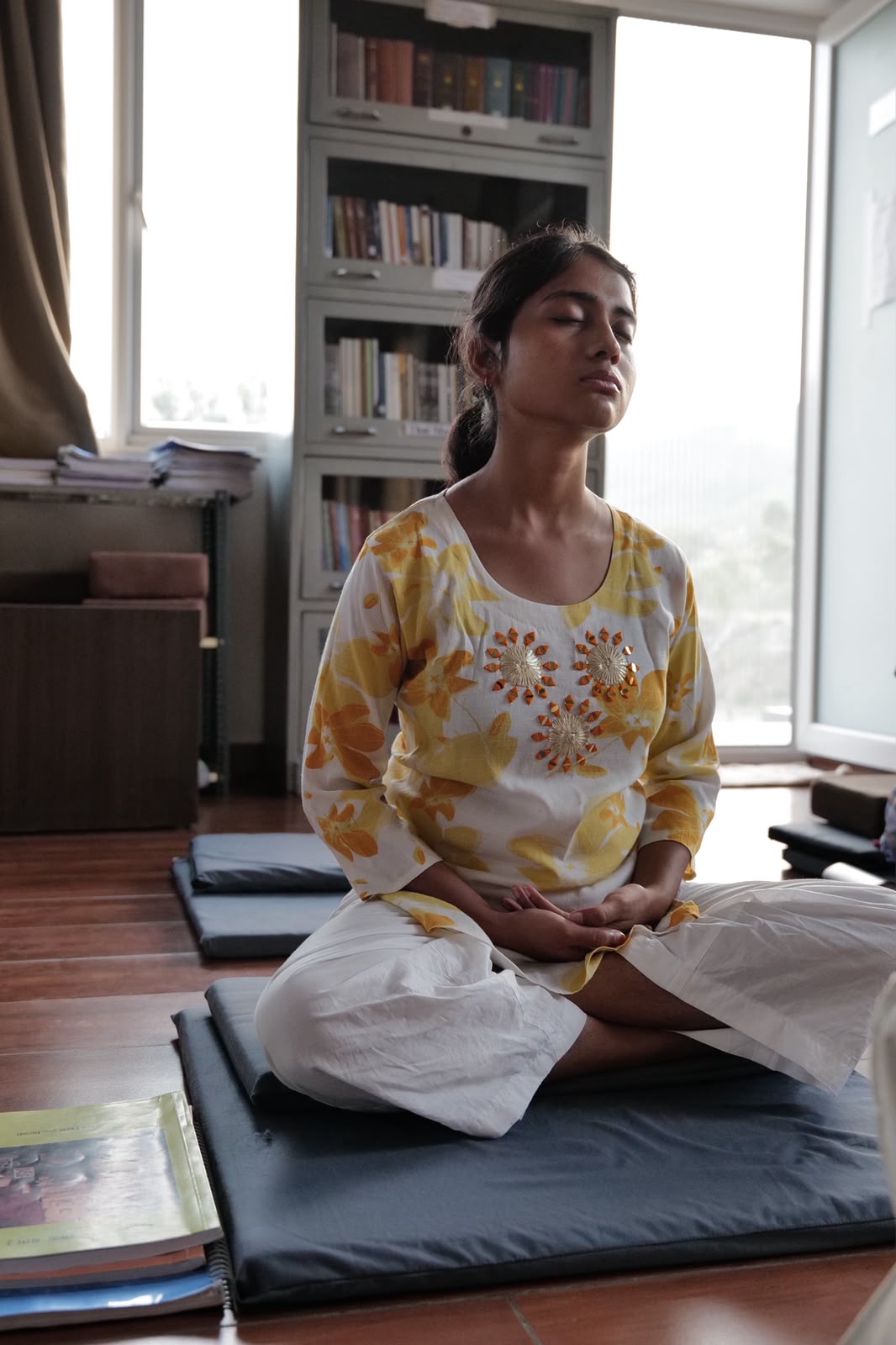
My First Visit to Arañña Saṅghārāma
By Siddhi
A few months ago, a kalyāṇamitta introduced me to Arañña Saṅghārāma and suggested that I attend its first anniversary celebration. It was my first visit to a monastery, and I had no idea that those three days would quietly change the way I looked at life.
During the anniversary, I had the opportunity to listen to Venerable Luang Por Liem, Ajahn Kevali, and other visiting monks from the Ajahn Chah tradition. I returned home carrying not only beautiful memories but also simple Dhamma teachings that slowly began helping me in my everyday life.
From that moment, I knew I wanted to return. A few months later, I was fortunate to spend more time at the monastery, and I realised that
some of the deepest teachings are not only heard during Dhamma talks—they are discovered by simply observing everyday life.
Learning from the Children
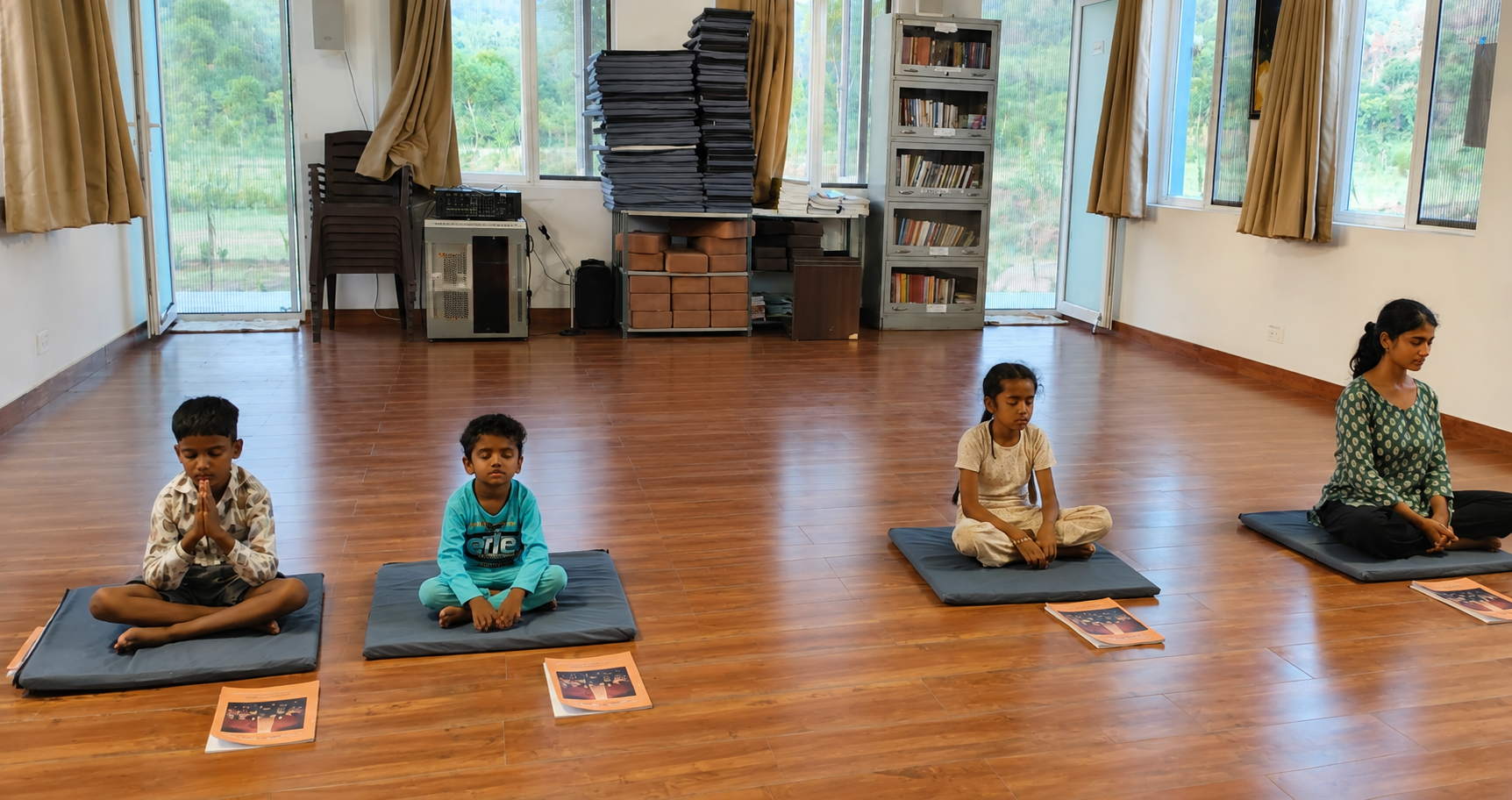
The best part of my day at the monastery was spending time with the children from the nearby village. Every morning, Rishu, Anika, Mayank, and Manu would come to the monastery. Looking after them somehow became my responsibility, but very soon I realised that they were teaching me far more than I was teaching them.
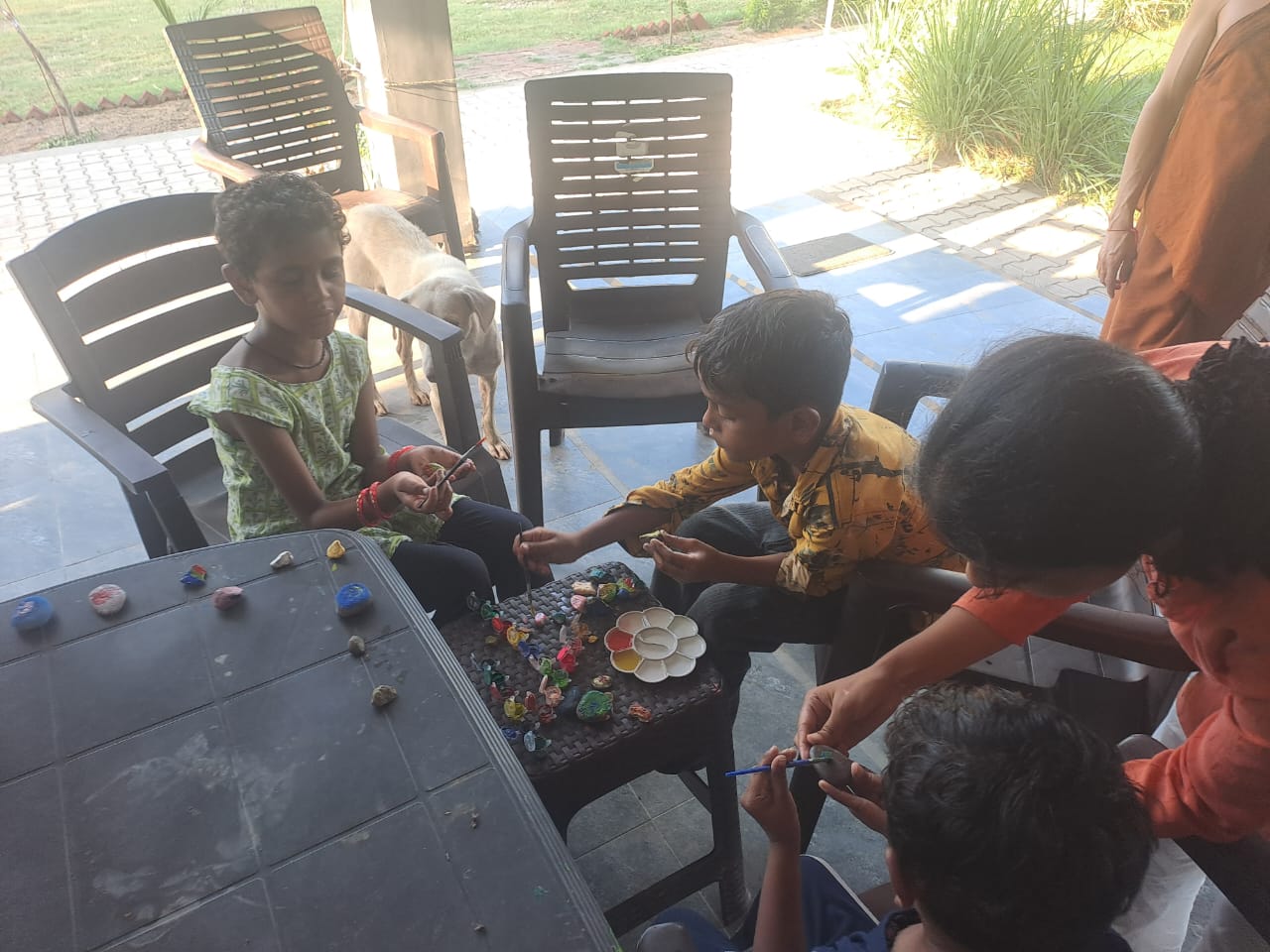
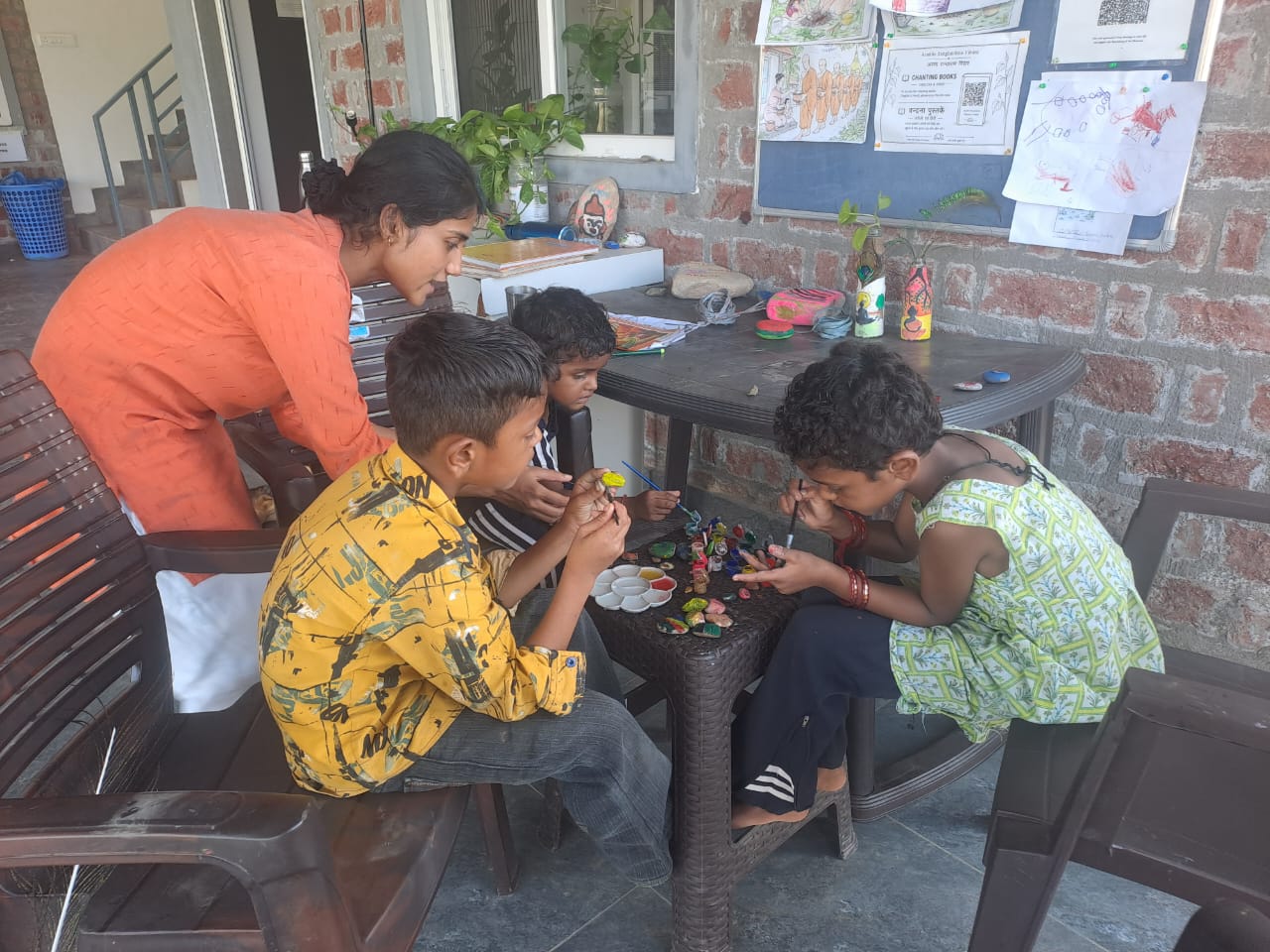
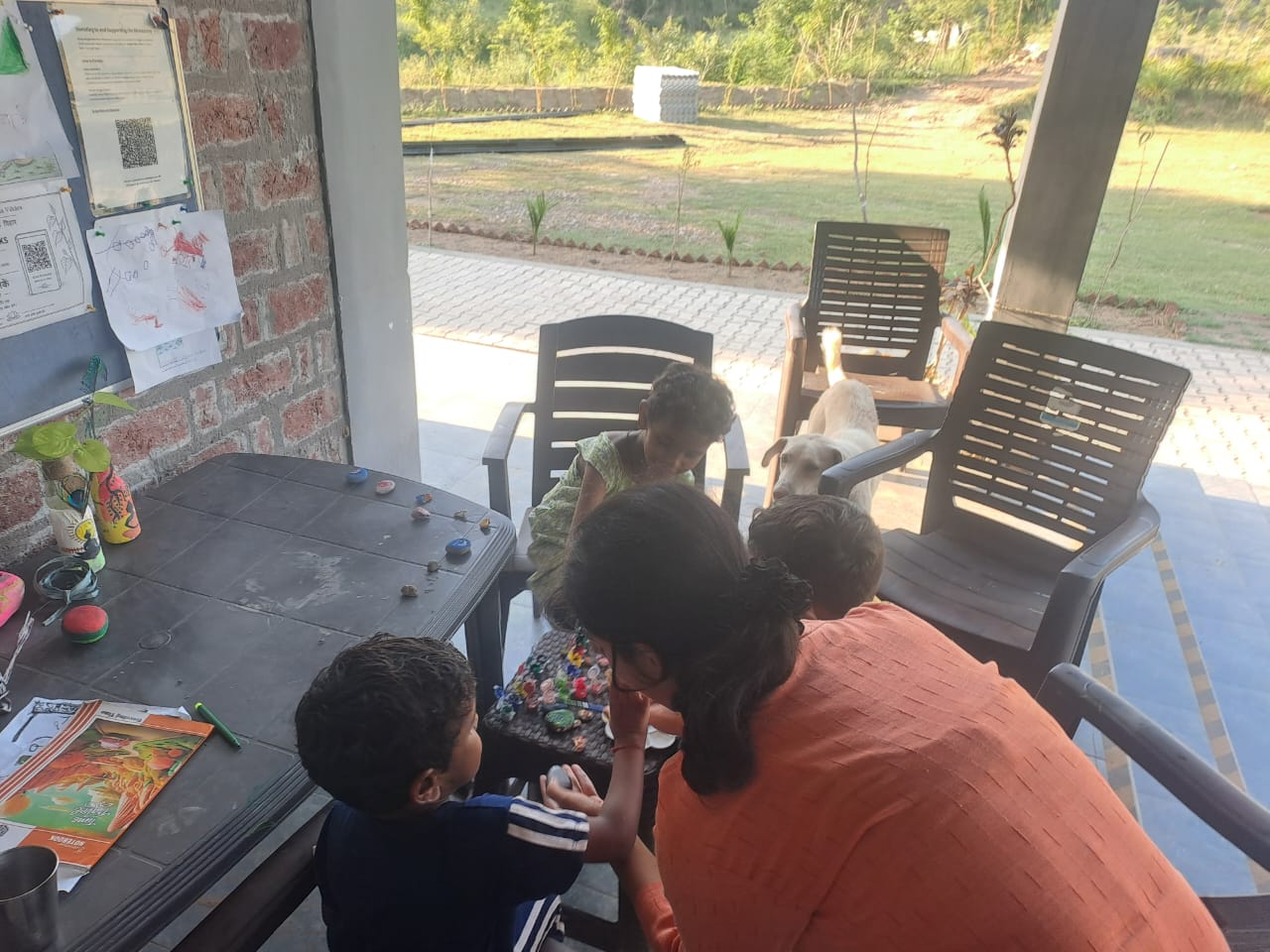
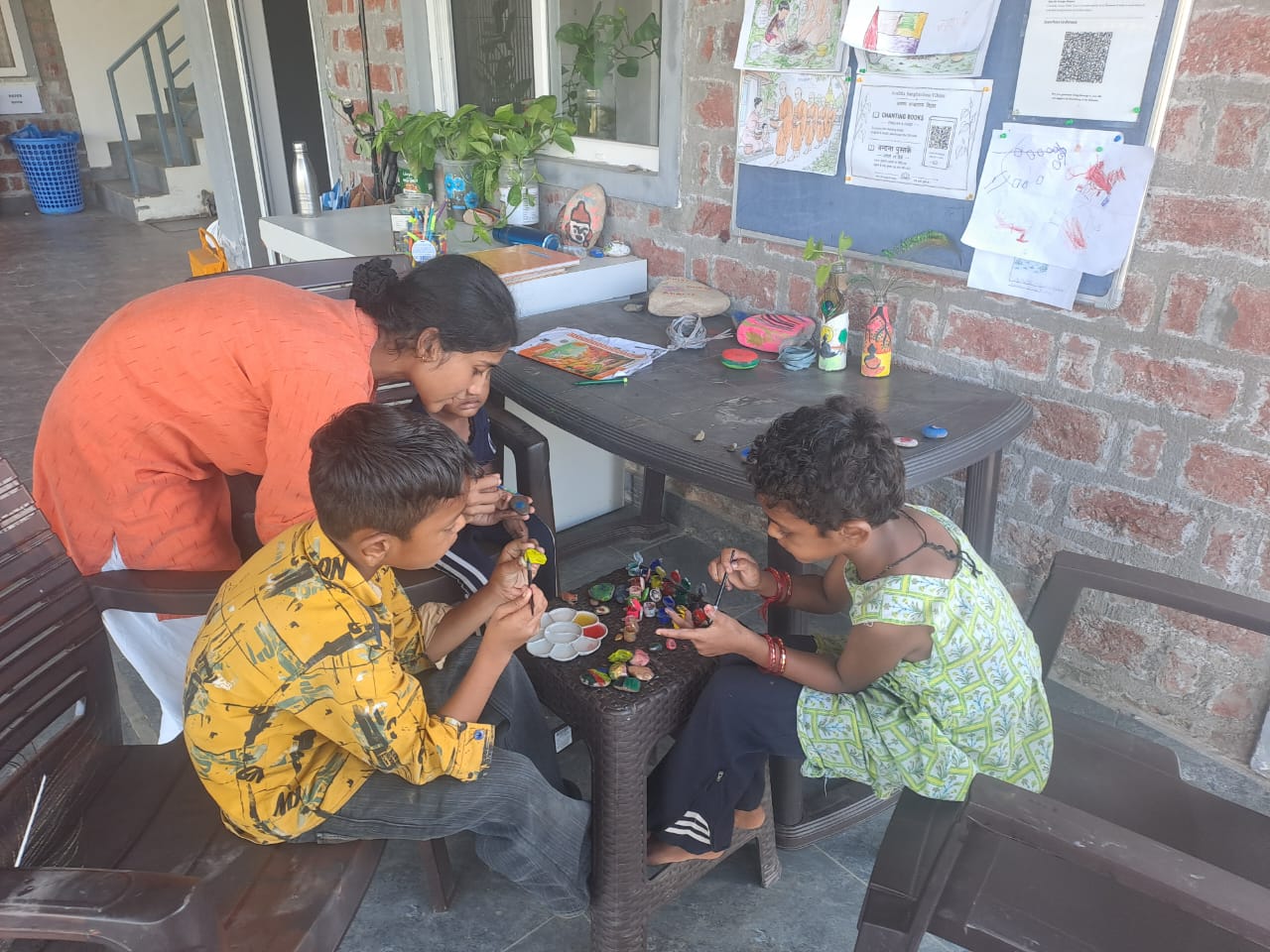
Watching them closely was fascinating. I could almost see how our sense of identity develops and how conditioning quietly begins. Four-year-old Rishu copied almost everything his older siblings did.
One day, while we were colouring, I asked him to colour a leaf green. He looked at me innocently and asked, “What is green?” Another child happily coloured the leaf blue. It reminded me that
Before we learn how things are “supposed” to be, the mind is naturally open and free.
Mindfulness Through Observation
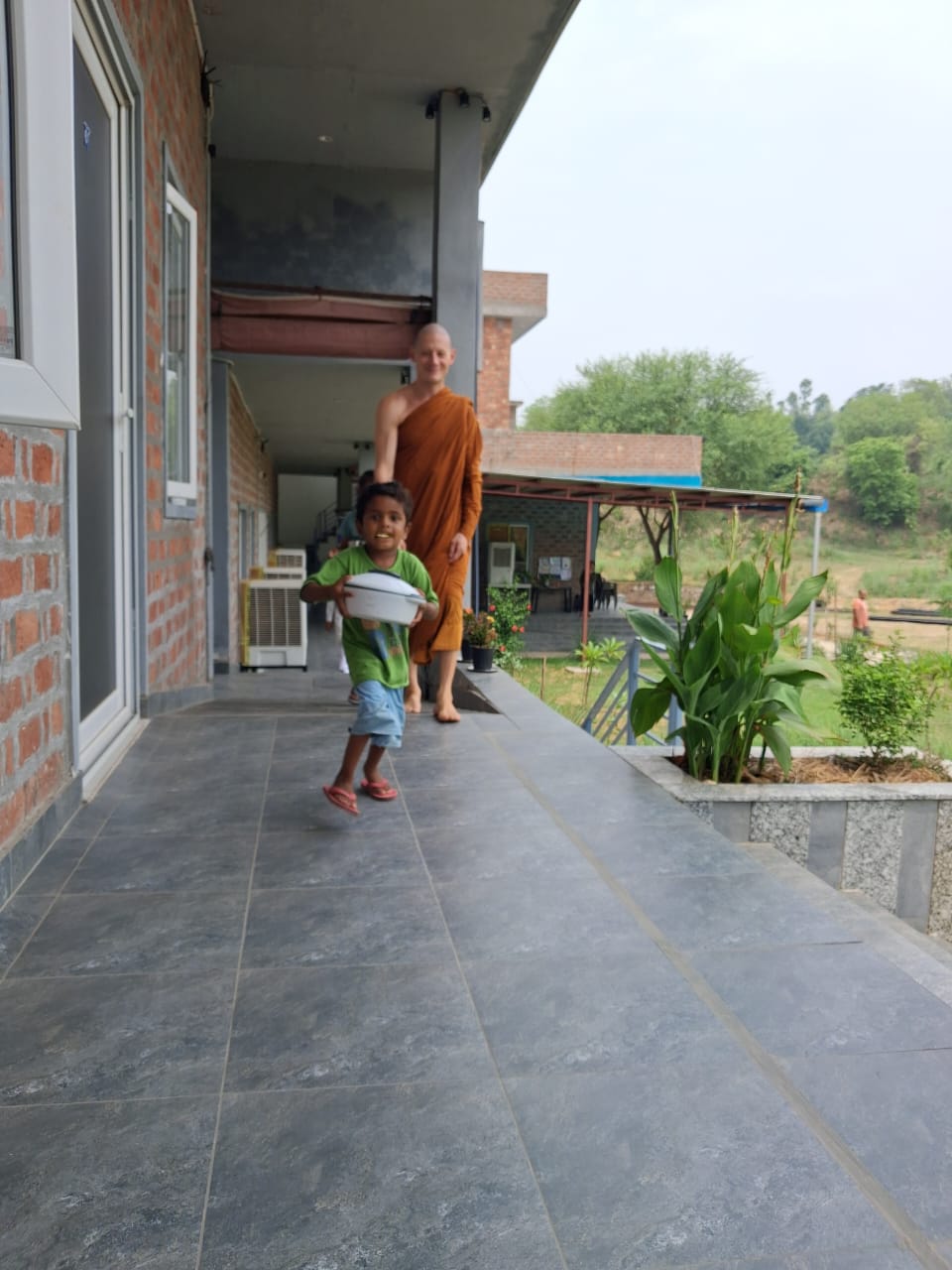
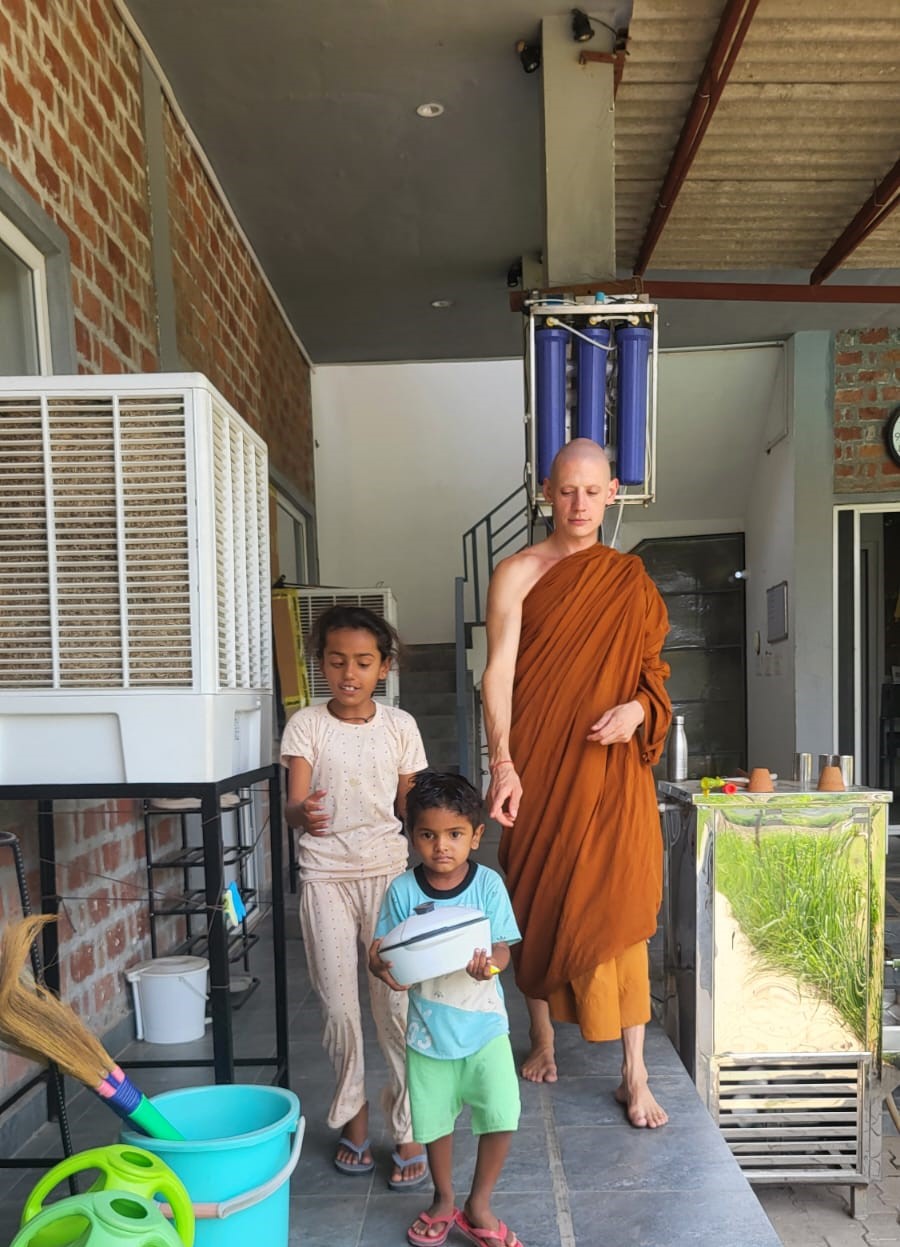
One of my favourite moments was asking the children, “Can you show me how Guruji walks?” Instantly, they would lower their eyes and begin walking slowly and mindfully, just like the monks on alms round. No one had formally taught them mindfulness.They had simply been observing.
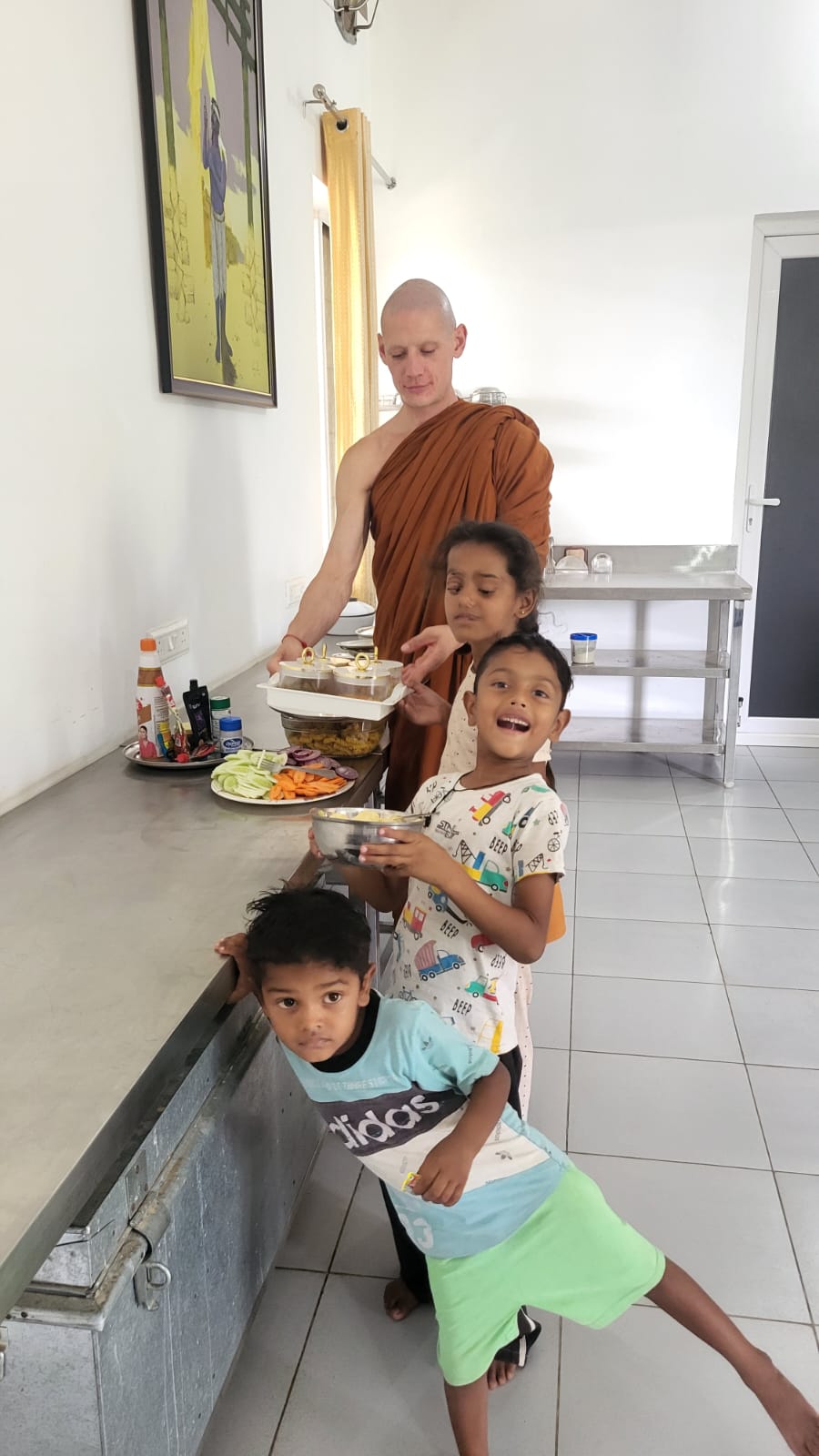
The same was true during meals. They took only as much food as they could eat, washed their own plates, arranged their slippers neatly, and reminded one another not to waste food. The monastery was teaching them through example.
A Lesson in Generosity
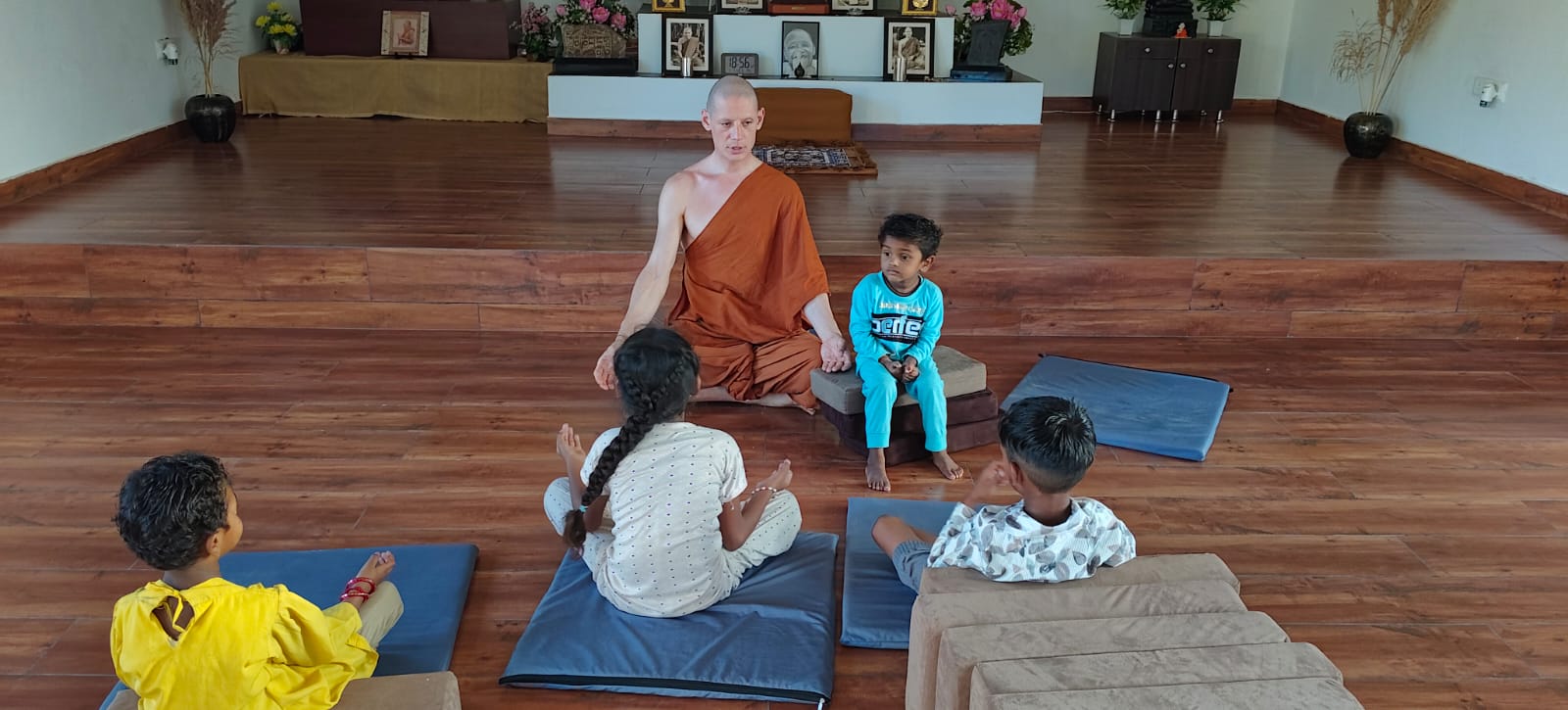
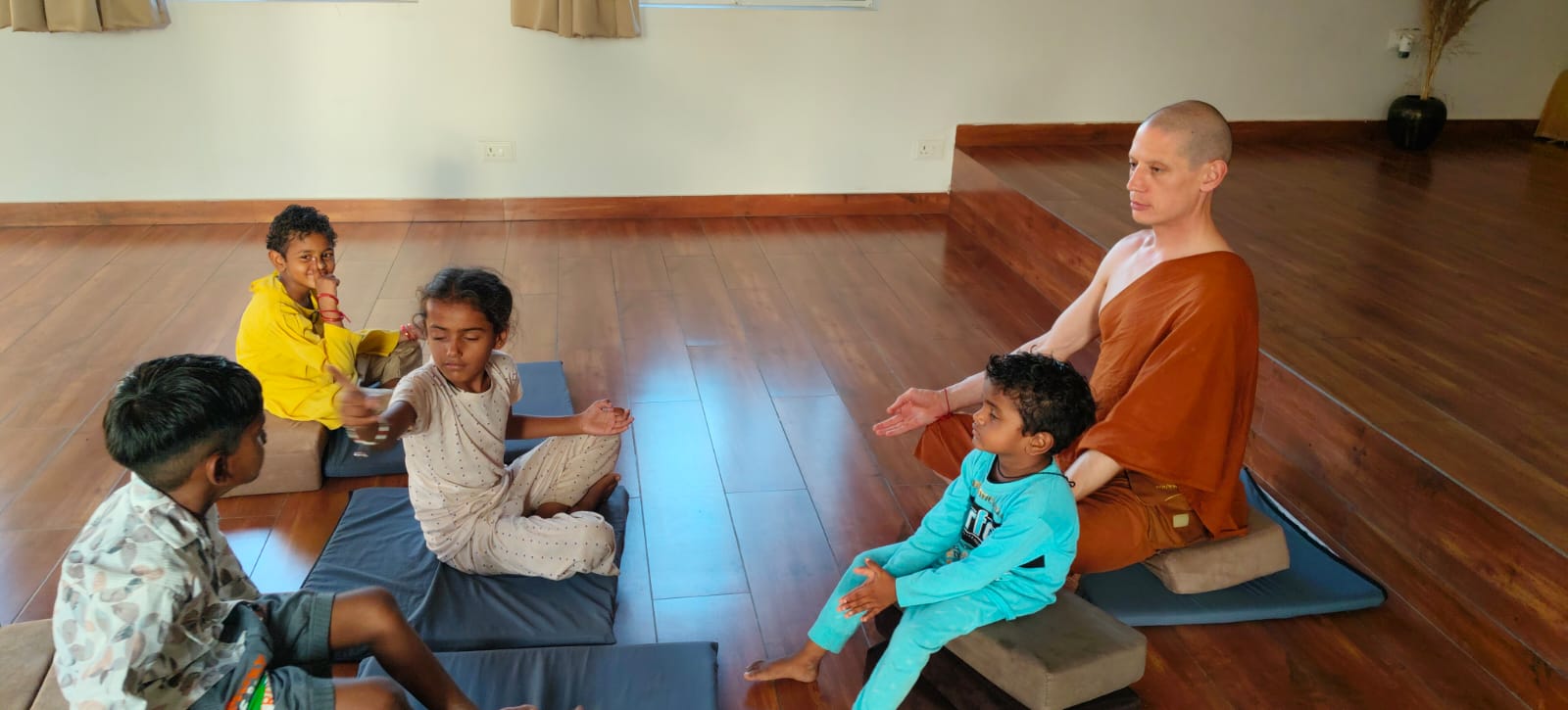
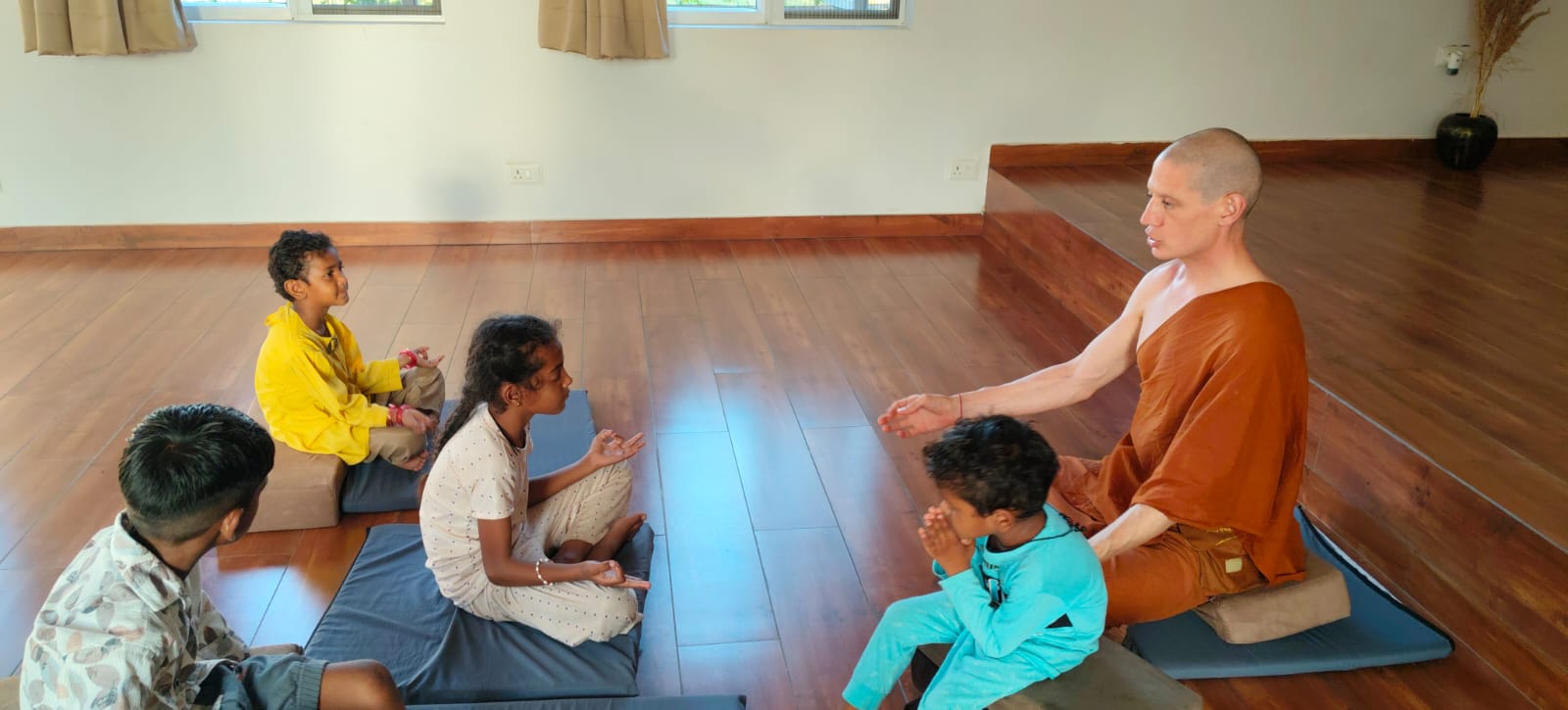
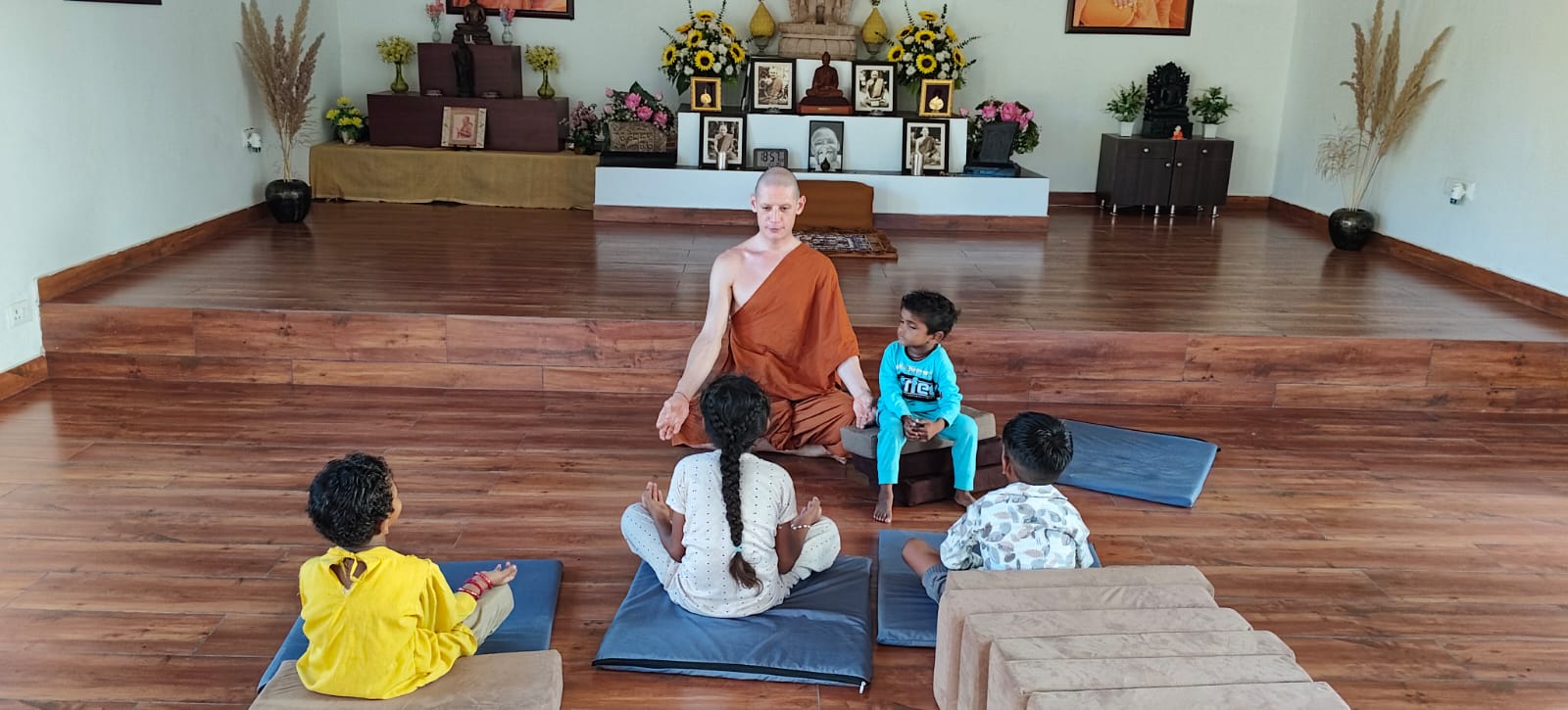
One afternoon, Bhante told the children a story about generosity. During the discussion, one of them smiled and said, “Just like we offer roti to Guruji every day.”
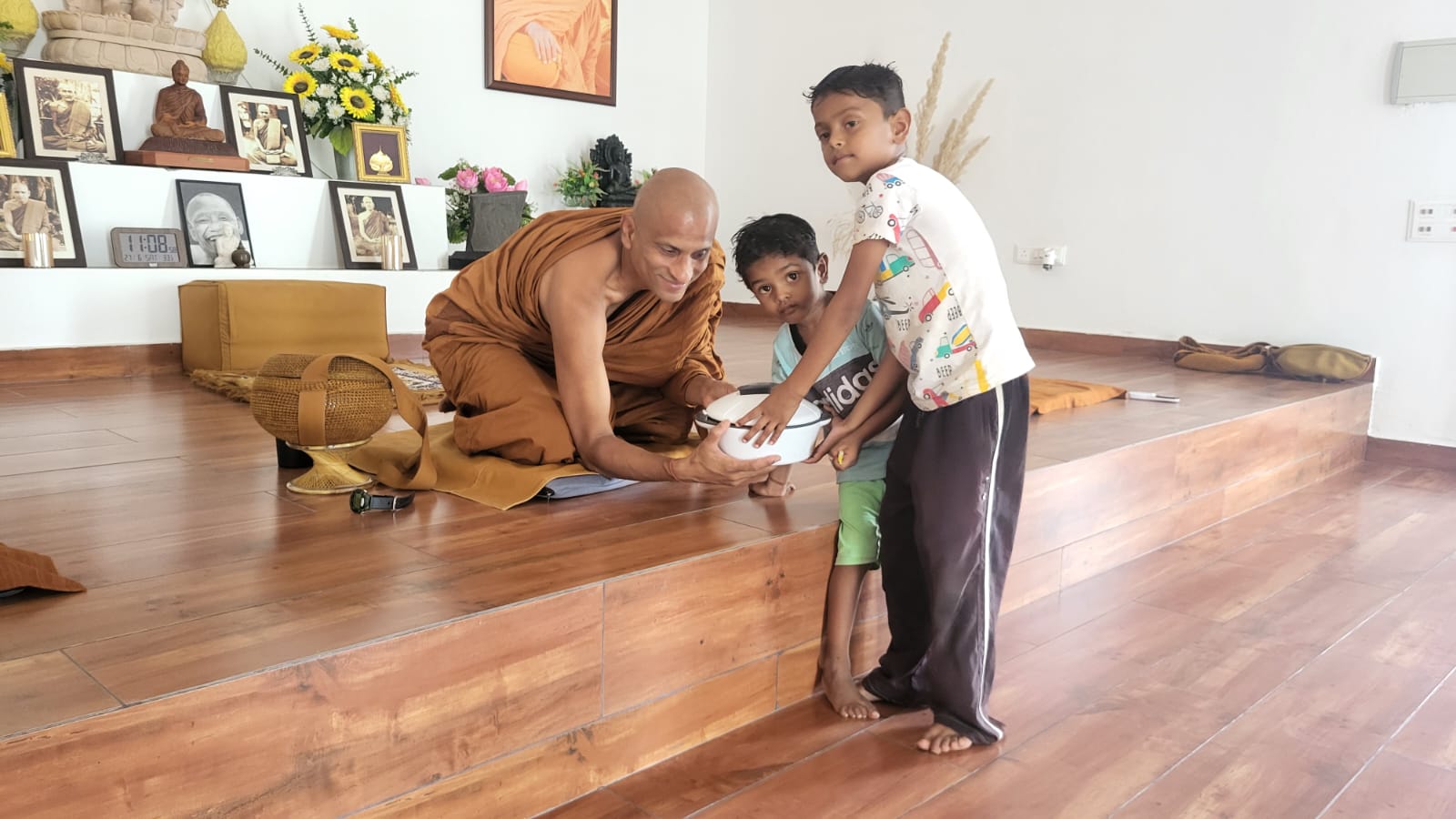
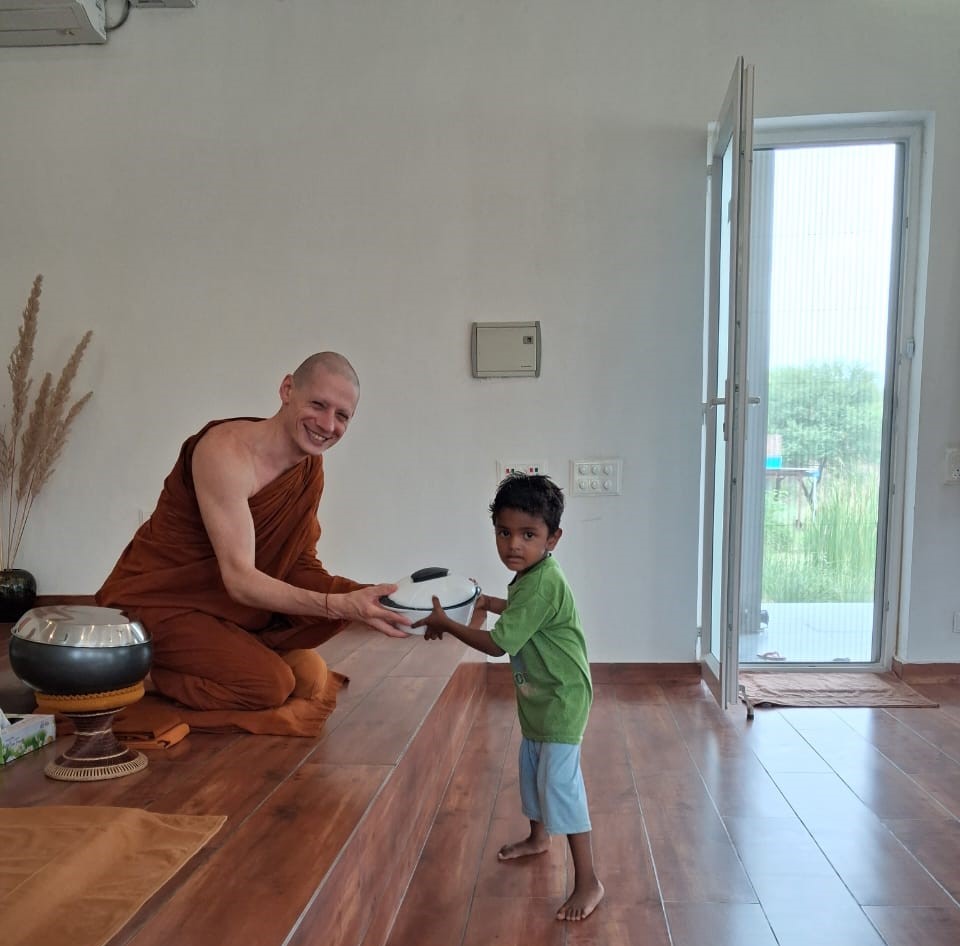
Later that afternoon, while everyone was busy playing, little Mayank quietly came to me and placed his chocolate in my hand. He didn’t say a word—he simply smiled and ran away. That small piece of chocolate became one of the most beautiful Dhamma lessons I have ever received.
It reminded me that children learn much more from what they see than from what they are told.
Every Task as Practice
The children were not the only ones teaching me. Every day, I found myself learning simply by observing the venerable monks.
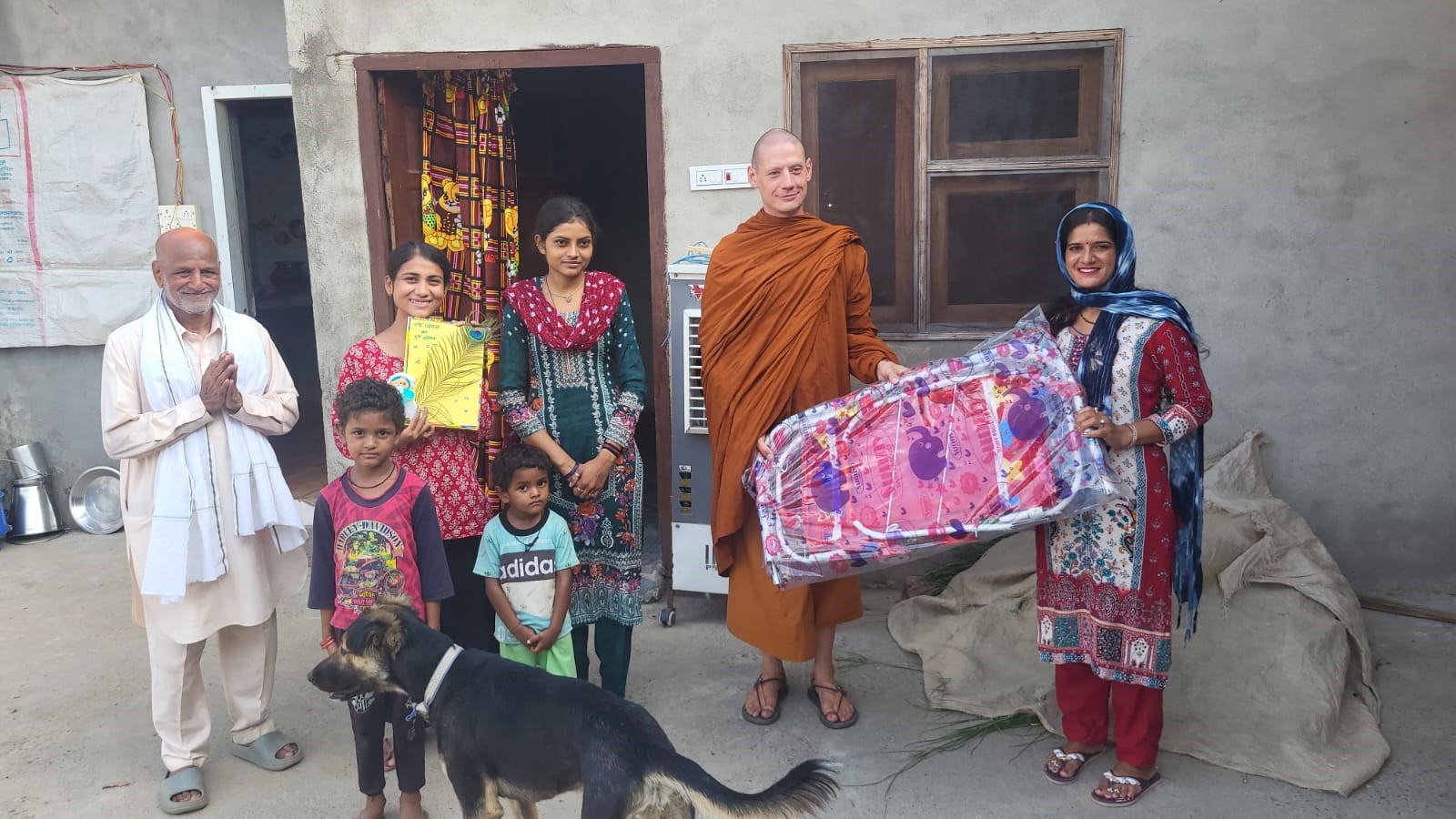
Before coming to Arañña Saṅghārāma , I often felt that there was never enough time. Yet at the monastery, I found myself meditating, chanting, cleaning, making handicrafts from discarded materials, spending time with the children, managing my professional work, eating on time, and still ending the day with a peaceful mind. The twenty-four hours were the same as before.
The difference was the quality of attention I gave to each moment.
Learning from the Monks
Watching the monks changed my perspective towards work. They welcomed visitors, taught the Dhamma, swept the monastery grounds, worked on the land, washed toilets, cleaned the kitchen, and cared for the monastery with the same calmness and sincerity. There was no feeling that one task was more important than another. Every task was done with mindfulness and care.
Seeing this made me question my own attitude towards work. I realised that it was not the work that created suffering but the labels I attached to it. Cleaning the floor or washing a toilet no longer felt like a burden. When done with awareness, even the simplest task became a meditation practice.
Daily Chanting and Dhamma Reflections
Another part of monastery life that touched me deeply was the daily chanting. Sometimes a single verse stayed with me throughout the day, encouraging me to reflect on my own life. At other times, it quietly answered questions I had been carrying within myself for months. Our discussions on the suttas expanded not only my understanding of the Buddha’s teachings but also my understanding of life itself.
During my stay, I also had the privilege of listening to Ajahn Jayasaro. As I listened, I felt that many questions I had silently carried within me found gentle answers—not because someone gave me a direct solution, but because my understanding became a little clearer.
A Different Way of Living
Looking back, I can honestly say that this has been one of the most peaceful periods of my life.
Arañña Saṅghārāma taught me that peace is not found by escaping life. It is found in the way we meet each moment. It taught me that happiness does not come from having more but from living with mindfulness, gratitude, simplicity, and kindness.

Visiting and Supporting
Visitors are warmly welcome to the monastery.
👉 Visitor Guidelines:
https://aranyavihara.in/visiting-aranya-sangharama/
If you would like to support the monastery in its Dhamma service, please see below:
🙏 Donations:
https://aranyavihara.in/donations/
📸 Photo Credits:
Arañña Saṅghārāma Collection
🌐 Stay Connected
📘 Facebook: Aranya Vihara Trust
📸 Instagram: @aranyaviharatrust
📩 Email: aranyasangharma@gmail.com
▶️ YouTube: AVT Channel