
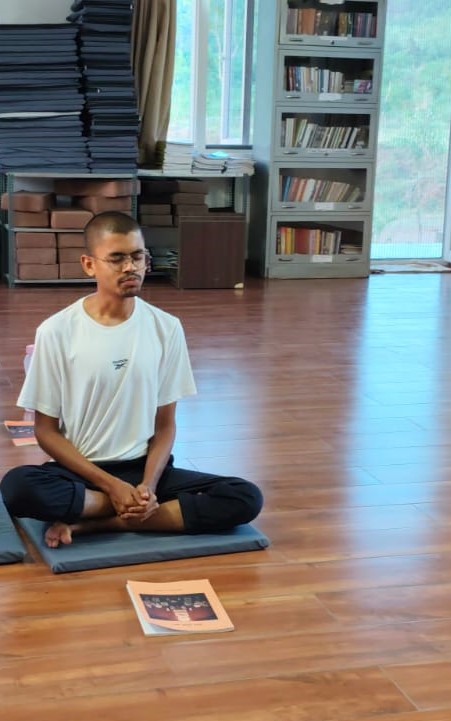
Two Months at the Arañña Saṅghārāma
By Nikesh
When I first arrived at the monastery, I came with two intentions. The first was to learn the Dhamma — the teaching the Buddha gave us — directly from the Venerable monks. The second was to look honestly at something I had been feeling for a while: a strong, recurring pull toward the Saṅgha. I wanted to sit with that feeling and understand where it came from.
To follow through on both, I decided to meet each of the monks individually, at intervals, to learn from them, reflect on whatever they told me, and try to bring it into my daily life. This became a steady rhythm throughout my stay.
Starting From the Beginning
I remember clearly the first time I asked a Venerable monk for his time. He kindly but firmly pointed out, based on the varied things that I said
that the world that I inhabited was largely a creation of my own i.e. my sanna.
So first of all I needed to work on my perception (sanna) before anything else. I felt a little uncomfortable hearing that. Then, very kindly, he explained that I should strengthen my foundational understanding of the Buddha’s teachings; he gave me two books by Ven. Bhikkhu Bodhi — The Noble Eightfold Path and In the Buddha’s Words.
A part of me resisted at first. I had been meditating for years, and I had already read many books by different Ajahns — why send me back to the basics? But I trusted him and started reading anyway.
Slowly, I began to understand exactly why. Before this, whenever I saw a living being, or someone close to me, in a painful situation, I would grow restless, and try to help from that restlessness. But reading about Right View — specifically the teaching on kamma — shifted something in me. I saw that behind any being’s present situation lie countless conditions. If we trust the Buddha’s teaching on rebirth across many lives, then this conditioning isn’t only from this life— it stretches back across many lives, and simply shows up now in a person’s thoughts, speech, and actions.
Sitting with this made me calmer. It didn’t mean I should stop helping people — only that I needed to stay steady myself while doing so. The teaching on kamma helped here too: when we help someone, we can’t expect a particular outcome, because the outcome isn’t ours to control — too many conditions are working behind it. All we can really do is keep making sincere effort from a calm, steady mind, without letting ourselves get shaken.
Looking at My Own Grasping
The second shift was harder to describe. It had to do with how tightly I held on to my own perceptions, and how to bring that into meditation. I had mostly practiced watching body sensations without reacting to them.
so this more reflective, discursive style was new and difficult for me at first. Still, I tried. I brought to mind the people and situations I had been holding on to, or that had troubled me in the past, and traced them back to their root.
What I found was the same pattern each time: either I wanted to change a person or situation, or I simply couldn’t accept them as they were. Underneath that, I had built up real aversion — and seeing this frightened me a little, because I realized I had been generating that aversion while telling myself I only wanted to do good for someone.
So I asked myself: if I am governed by so many of my own conditions, then surely everyone else is governed by theirs too.
If I can’t fully control my own mind, how can I expect anyone else to be different?
Slowly, my perception began to shift, and the things I had been gripping so tightly started to loosen. I felt lighter, and more at ease with myself, than I had in a long time.
Turning Chores Into Practice
Before coming here, I spent most of my meditation time sitting still. But once I was offered different kinds of service — most of it completely new to me, like turning cow dung and waste into compost, cleaning the grounds, or tending the plants — I began treating the work itself as my meditation object. To my own surprise, I started enjoying it.
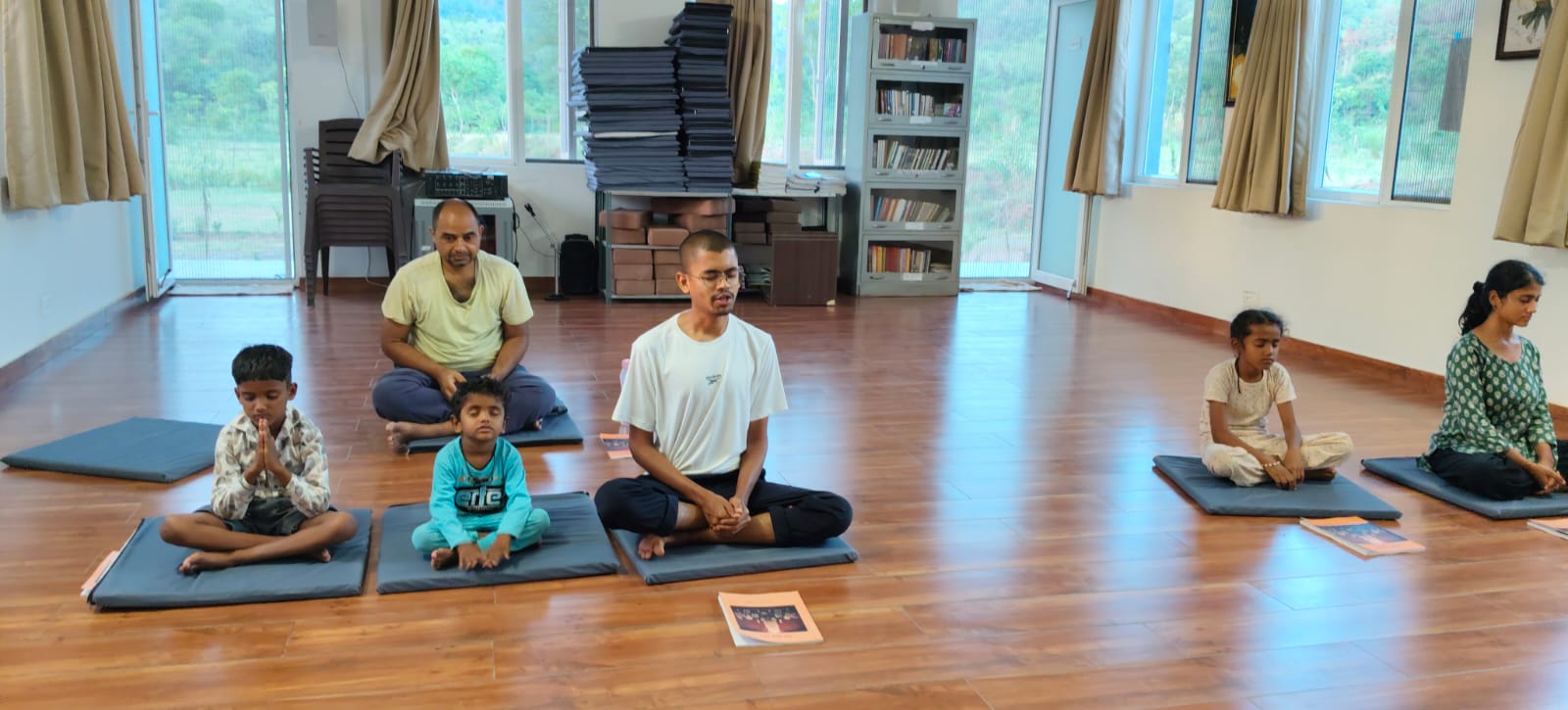
If an uncomfortable thought came up while I worked, I would simply watch it, almost like watching a small drama play out, then let it pass — the way travellers arrive and leave a dharamshala.
Little by little, I understood something that has stayed with me since:
the problem is never really out there.
Not in another person, not in the surroundings, not in the task itself — it’s within us. We live together here as a community, and that naturally means we need to get along. When something someone said upset me, I learned to turn the question inward instead of outward. I noticed that discomfort, once truly seen, has a lifespan of its own — it stays a while, then passes on its own. So sometimes, just seeing a thought or feeling clearly was enough to dissolve half the difficulty. Other times, I would get pulled into it, and that’s when real trouble started. On those days, I would bring it to my evening meditation and sit with it there.
This was an entirely new kind of practice for me: keeping a constant watch over my mind, speech, and body, and gently letting go of anything unwholesome as soon as I noticed it. Sometimes just seeing it was enough for it to pass. When it kept returning, I would look more deeply into its root — and each time, it seemed to return a little less.
Walking Behind the Line
Going on piṇḍapāta, the alms round, with the Venerable monks was one of my favourite parts of being here.
I liked to think of it as one long, unbroken line of the Sangha
starting with the Buddha himself, then Venerable Sariputta, then Venerable Mahamoggallana, then so many monks since — and here I was, walking behind our own Venerable monks in that same line, like an attendant. Even in that small way, it felt like real good fortune.
It also turned out to be the best training ground for walking meditation I have known. Every part of it asked for attention — greeting villagers as we passed without getting swept up in conversation, saying only as much as was needed, and keeping pace with my companion so as not to fall behind.
It was, for me, the perfect place to practise sati and sampajanna. And simply watching how the Venerable monk spoke with people along the way taught me things I tried to carry back into my own life.
Growing Through Discomfort
I had my own weak points too. I noticed the monks had a way of steering me toward exactly the situations I found hardest. I had carried some old discomfort around English, and yet the monks kept encouraging me to step in and translate — turning the Dhamma talks and guests’ questions into Hindi.
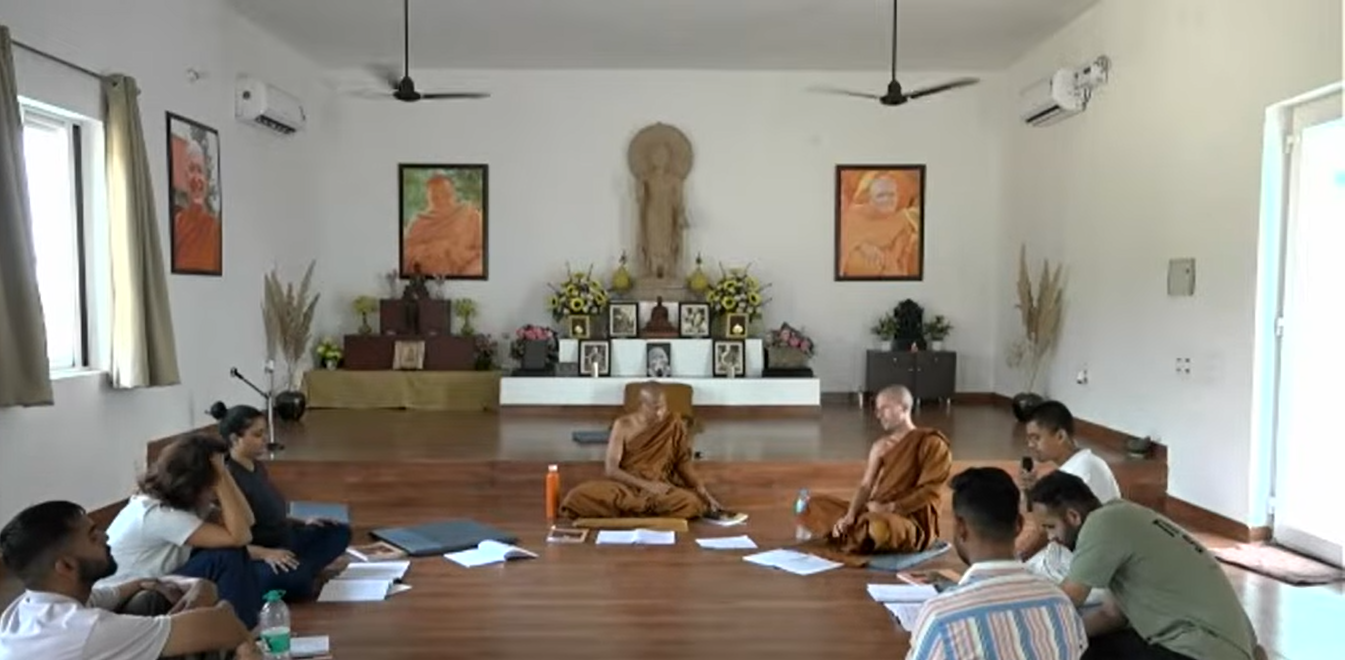
At first this felt genuinely uncomfortable. But over time, I realized how much that process was teaching me. It gave me insight into the Dhamma I wouldn’t have found otherwise, and it quietly wore down my fear of English along the way. It taught me something I hadn’t expected:
real meditation often happens exactly in the situations we’d rather avoid
in staying with the discomfort long enough to see what’s underneath it, and slowly letting that go.
Watching How They Live
Alongside all this, I paid close attention to how the Venerable monks spent their days — it was its own kind of teaching. They were always offering some form of service, and whenever a guest arrived, they gave that person their full attention. To them, everyone seemed equal, regardless of background or worldly standing; I never once saw them judge someone by their question or where they came from. There was simply room in their hearts for everyone.
One of my own assumptions broke here too — the idea that we need to hold tightly to our own beliefs. One day, a Venerable monk invited me to visit the Adi Badri temple, which genuinely surprised me. Later, I also joined a village bhandara and an overnight jagrata held for Gogaji Maharaj. From these experiences, I learned something simple but important: to respect every faith, and to hold that respect with real goodwill.
Getting to know each monk individually, I noticed how different their approaches were — some taught with great warmth and gentleness, others gave a firmer word when it was needed. But underneath those different styles, I found the same thing every time: real compassion, and a genuine wish to help however they could.
What Stays With Me
Looking back over these two months, what I feel most is gratitude — for the chance to stay here, to serve, and to learn the Dhamma from people who actually live it,who feel, to me, like living reminders of the Buddha’s own teaching.
This time gave me the chance to read, to understand, to ask questions whenever I got stuck, to let go of some old fixed ideas, and to try meditation in ways I hadn’t before. All of it has stayed with me.
And alongside the practice, I also got to see the very human, everyday side of the monks — how they joke with us, tease each other, sit and eat together, take us out sometimes, and once in a while, even celebrate the end of a long service stretch with a Coca-Cola party.
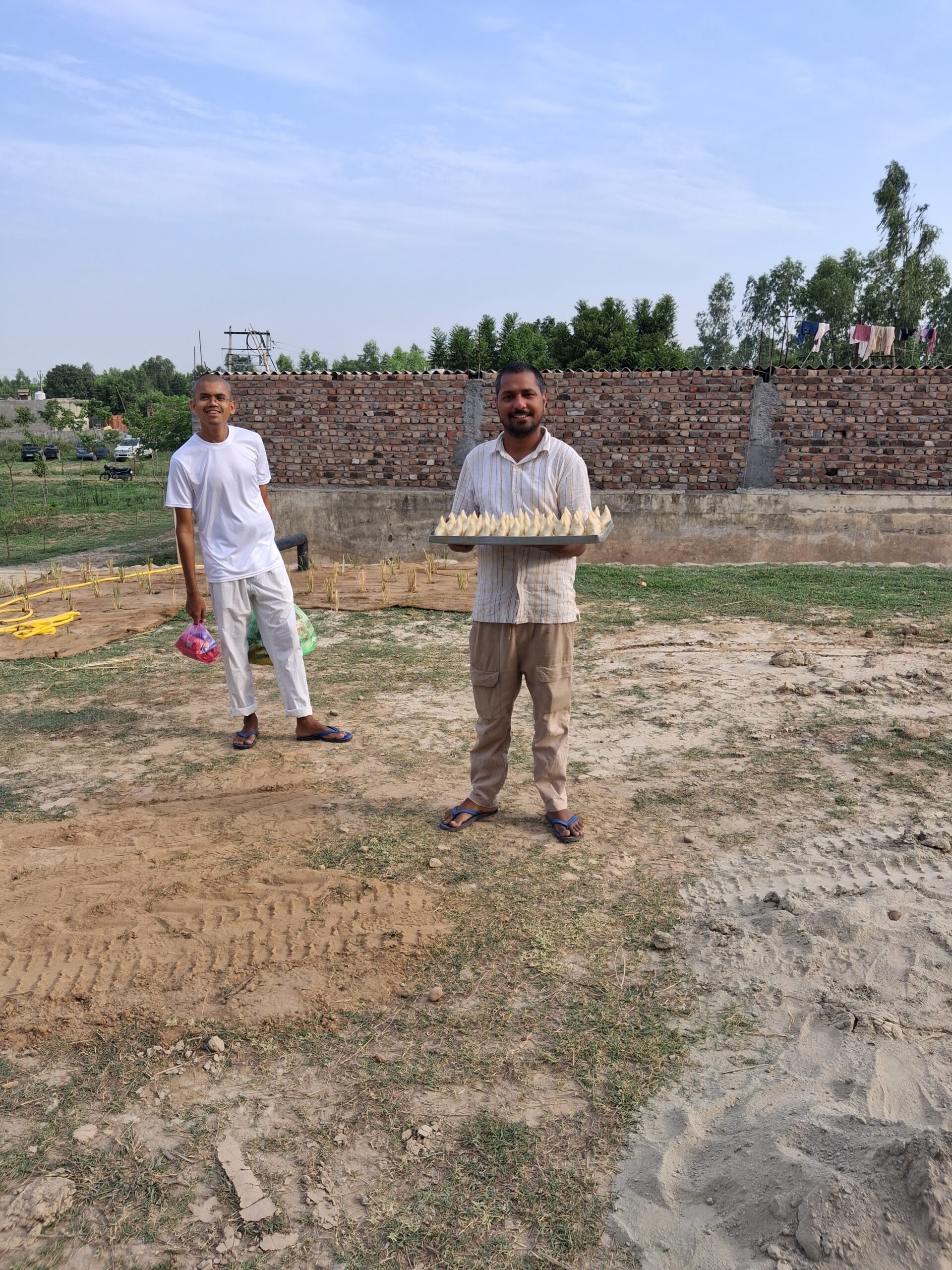
It’s this side of monastic life that made a particular teaching of the Buddha’s feel real to me during my time here:
Ananda said: “Venerable sir, it seems to me that kalyana-mitta — good friendship, good companionship, and good comradeship — is half of the holy life.”
The Buddha replied: “Do not say that, Ananda! Do not say that! Kalyana-mitta is not half of the holy life. It is the whole of the holy life.
When a bhikkhu has a kalyana-mitta, it is to be expected that he will develop and cultivate the Noble Eightfold Path.“

Visiting and Supporting
Visitors are warmly welcome to the monastery.
👉 Visitor Guidelines:
https://aranyavihara.in/visiting-aranya-sangharama/
If you would like to support the monastery in its Dhamma service, please see below:
🙏 Donations:
https://aranyavihara.in/donations/
📸 Photo Credits:
Arañña Saṅghārāma Collection
🌐 Stay Connected
📘 Facebook: Aranya Vihara Trust
📸 Instagram: @aranyaviharatrust
📩 Email: aranyasangharma@gmail.com
▶️ YouTube: AVT Channel