

The first kuti, soon to become a place of quiet practice for the Bhikkhu Saṅgha.
We are delighted to share the news that the first kuti at the monastery will soon be ready for use by the Bhikkhu sangha.
When the Kalyana Mitta Bhavan was completed and occupied in January 2025, just in time for the official inauguration of the monastery the following month, it provided a much-needed residence for the resident monks as well as the monastery’s supporters and administrators .Since then, the monastic community has lived and practiced in the main building while work continued on the next stage of the monastery’s development.
Vision of the First Kuti

A place of seclusion, simplicity, and contemplation.
From the beginning, however, the vision has been for the monks to live in individual kutis spread throughout the monastery grounds, following the traditional ways that monks have lived in relative isolation and solitude. A kuti is a place of seclusion, simplicity, and contemplation—a quiet dwelling to which a monk returns after the communal duties of the day have been completed. Surrounded by trees and close to nature, it provides an ideal environment for meditation and spiritual practice.
Learning from the Forest
The great forest masters of the Thai tradition, the Kruba Ajahns, emphasized the value of living in such places, and the Buddha himself praised those monks who dwell in the forest. Ajahn Chah often taught that the natural world is one of the greatest teachers of the Dhamma.
By observing the changing seasons, the growth and decay of plants, and the countless processes of nature, one comes to understand impermanence, causality, and the way things truly are. Living close to nature allows the practitioner to learn directly from these ever-present lessons.

Living close to nature, where the forest itself becomes a teacher.
Caring for the Land that Supports a Life of Practice
The Buddha also praised the generosity of those who make such a life possible. In the Velāma Sutta, he taught that the offering of a dwelling to the Saṅgha is among the most fruitful forms of giving, as it provides a place where the Dhamma can be practised, realized, and passed on to future generations.
Designed by Imarat Architects
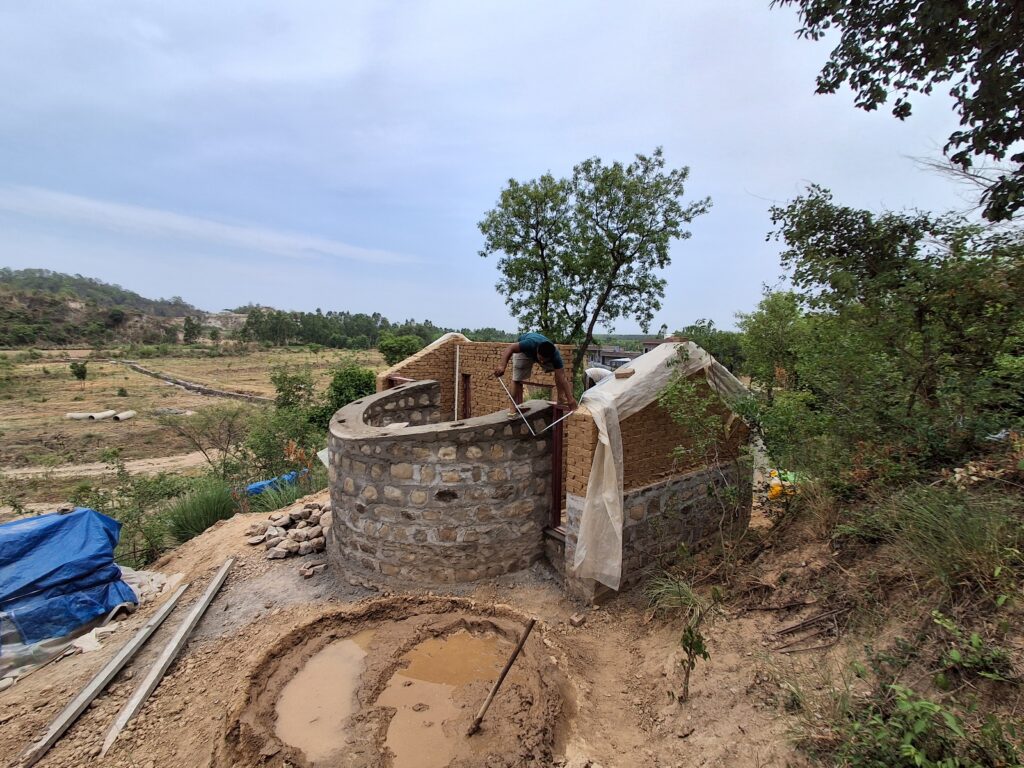
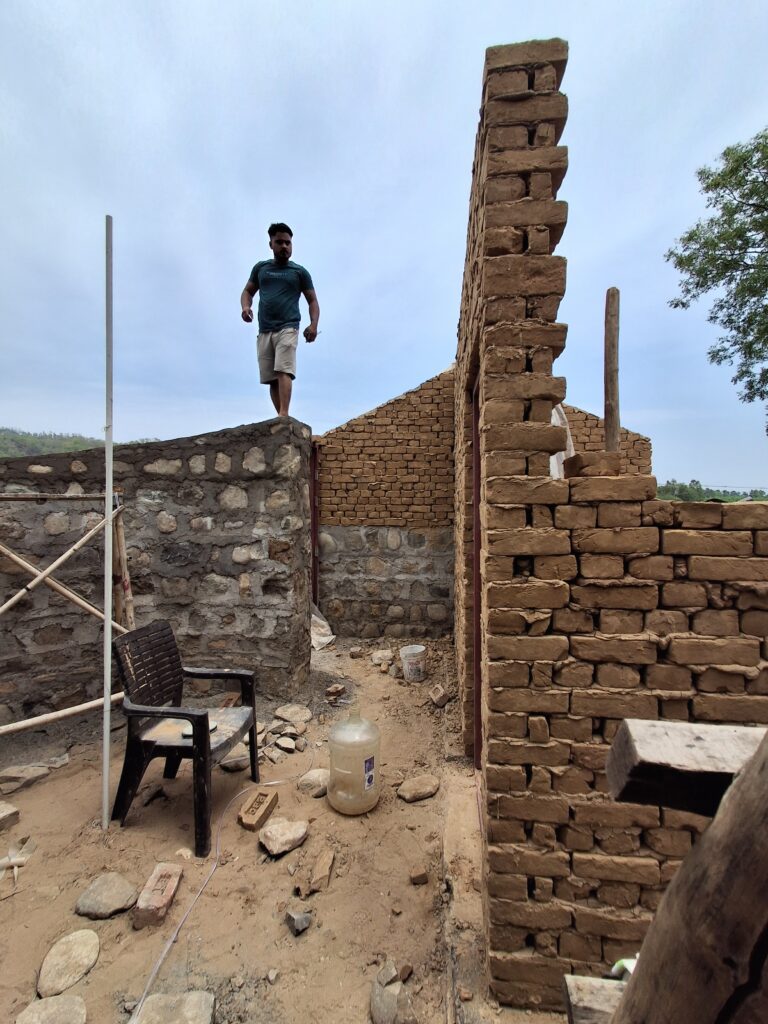
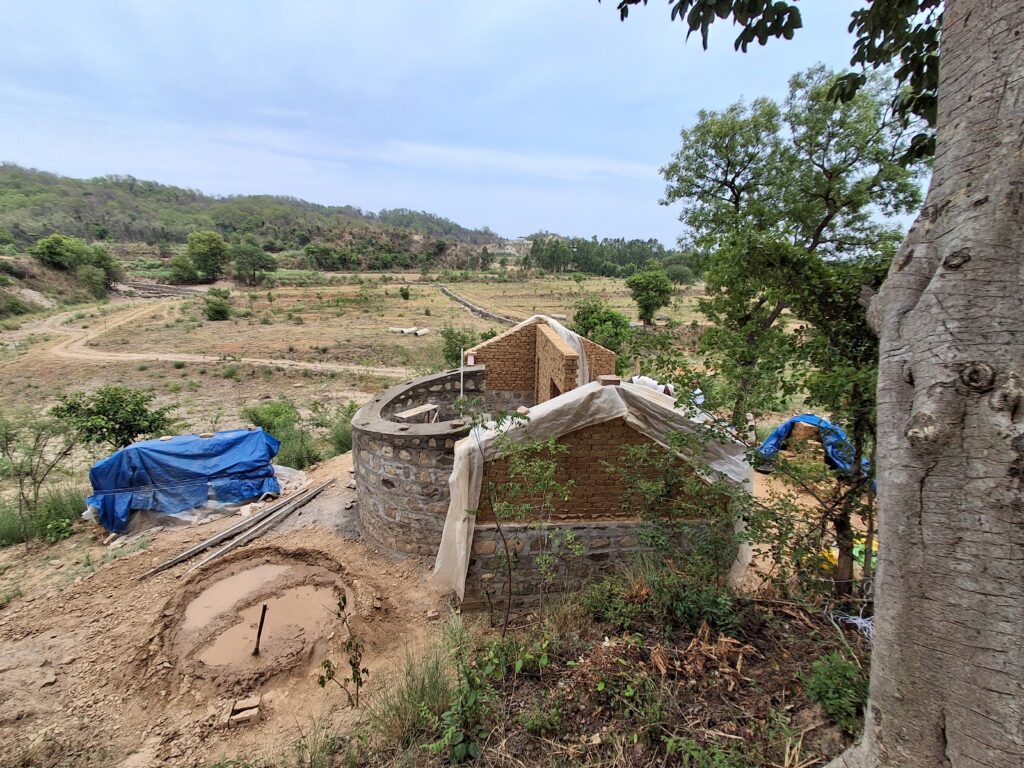
Traditional stone and mud-brick construction.
This first kuti was designed by Imarat Architects, who generously offered their services as an act of dāna after being inspired by meeting Ajahn Jivako and the first group of monks who came to stay on the land. The design makes use of natural materials; the thick mud-brick walls provide natural insulation, helping to keep the kuti cool during the summer months and warm during the winter.


Construction of the first kuti using traditional materials and local craftsmanship.
One of the most distinctive features of the design is the rounded meditation and shrine space,illuminated by a skylight that allows natural light to gently enter throughout the day. The construction itself became a collaboration between architects, craftsmen, and local villagers. In particular, two women from Rampur Gainda—the village where the monks walk for pindapāta each morning—applied the traditional plaster finish using a mixture of straw, sand, and cow dung, preserving local building knowledge and craftsmanship.
Completion of the Kuti

The completion of this kuti marks an important milestone in the growth of the monastery. It will be blessed by Venerable Ajahn Kevali during his upcoming visit and will be occupied during the monastery’s second Rains Retreat.
We would like to express our deep gratitude to everyone whose generosity, encouragement,and support have helped make this possible. Every contribution, whether large or small, has played a part in creating a place where monks can cultivate the path of Dhamma in peace and seclusion for many years to come.
Visit of Ajahn Jayasaro to Arañña Saṅghārāma


A warm welcome to all who gathered for the Dhamma programme.
Arañña Saṅghārāma was deeply honoured to welcome Ajahn Jayasaro for a visit from 22–24June 2026.Ajahn Jayasaro arrived at the monastery on the evening of 22 June and was warmly received bythe resident Sangha together with lay supporters staying at the monastery. Following a short Dhamma reflection, he met privately with the Sangha before retiring to rest after his long journey from Thailand.


Moments from a day of Dhamma, dialogue, and community.
A Day of Practice
The following day was dedicated to practice, study, and community. The programme began at 5:30 a.m. with an hour of meditation guided by Ajahn Jayasaro, followed by the morning chanting in Pali and Hindi
Piṇḍapāta
After chanting, the monks, led by Ajahn Jayasaro, set out on pindapat in the nearby village of Rampur Gainda.


Morning piṇḍapāta in Rampur Gainda.
Those guests who did not accompany the monks on alms round engaged in seva around the monastery, helping to clean the grounds and care for the plants and trees.
Dhamma Reflections
At 9:15 a.m. everyone gathered in the shala to hear further Dhamma reflections from Ajahn Jayasaro.

A day centred on meditation, Dhamma, and community practice at Arañña Saṅghārāma.
At 10:30 a.m., the lay community undertook the Five Precepts in the traditional ceremony and formally offered Sanghadana to the Bhikkhu Sangha.

The Sangha then chanted the customary anumodana blessing, after which all shared the meal together.
Questions on the Path
The group reconvened at 1:30 p.m. for a question-and-answer session, with questions coming both from those present at the monastery and from participants joining via Zoom. Topics included subtle meditation experiences, Right Speech, and the proper amount of sleep for practitioners.
Throughout the discussion, Ajahn Jayasaro repeatedly emphasized the importance of a holistic and well-balanced approach to practice—one that integrates all aspects of daily life rather than placing excessive emphasis on formal meditation alone. The Dhamma, he reminded us, is to be lived in every posture and circumstance.
Meeting the Local Community

Ajahn Jayasaro and the resident Saṅgha with villagers from Rampur Gainda
Following the Q&A session, Ajahn Jayasaro met with a group of villagers from Rampur Gainda who had come to pay their respects. He spent time speaking with them in a warm and friendly atmosphere, offering encouragement and answering their questions.

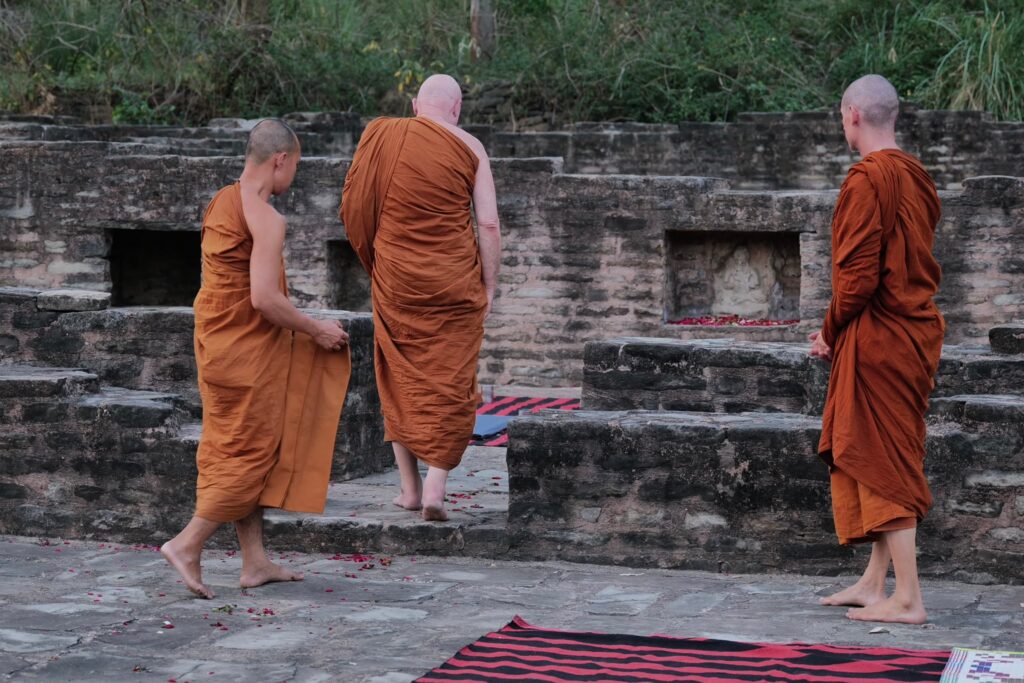
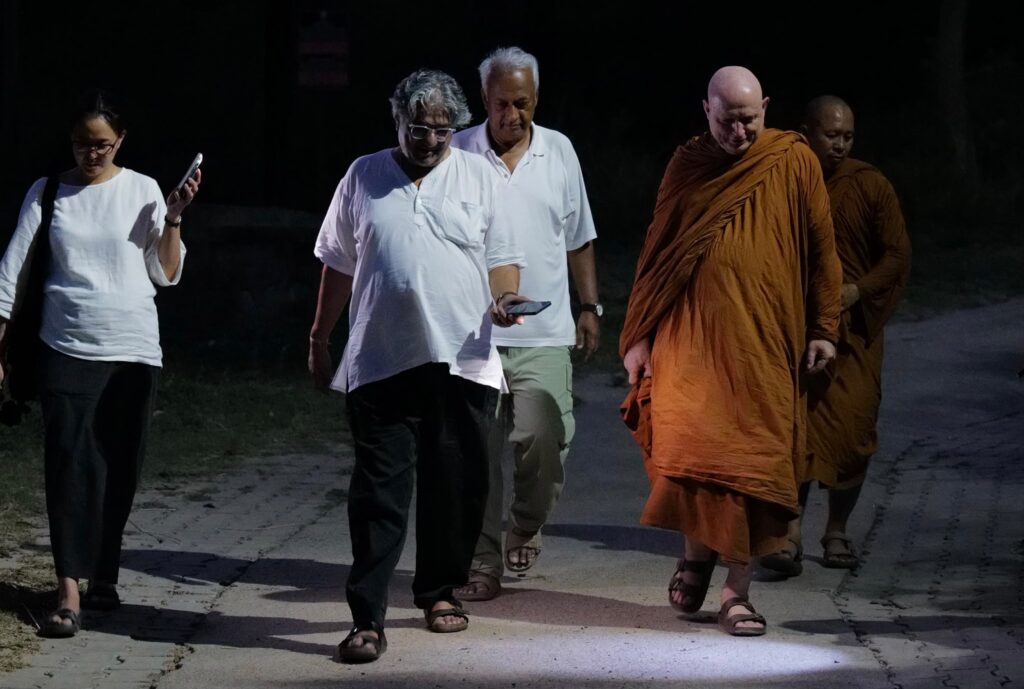
Walking to the ancient monastery site
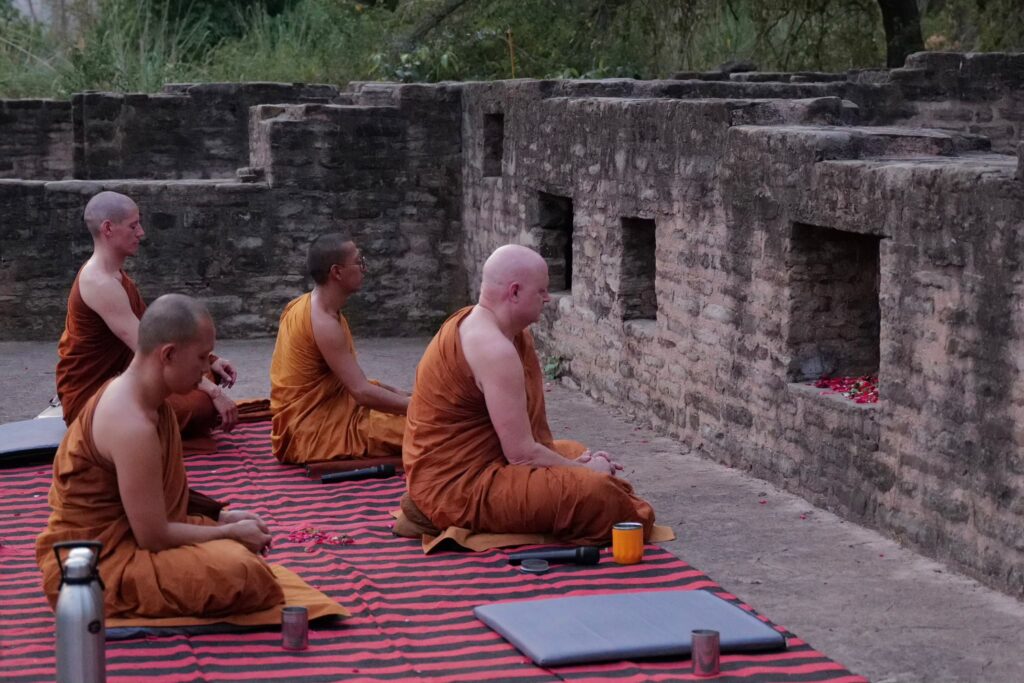
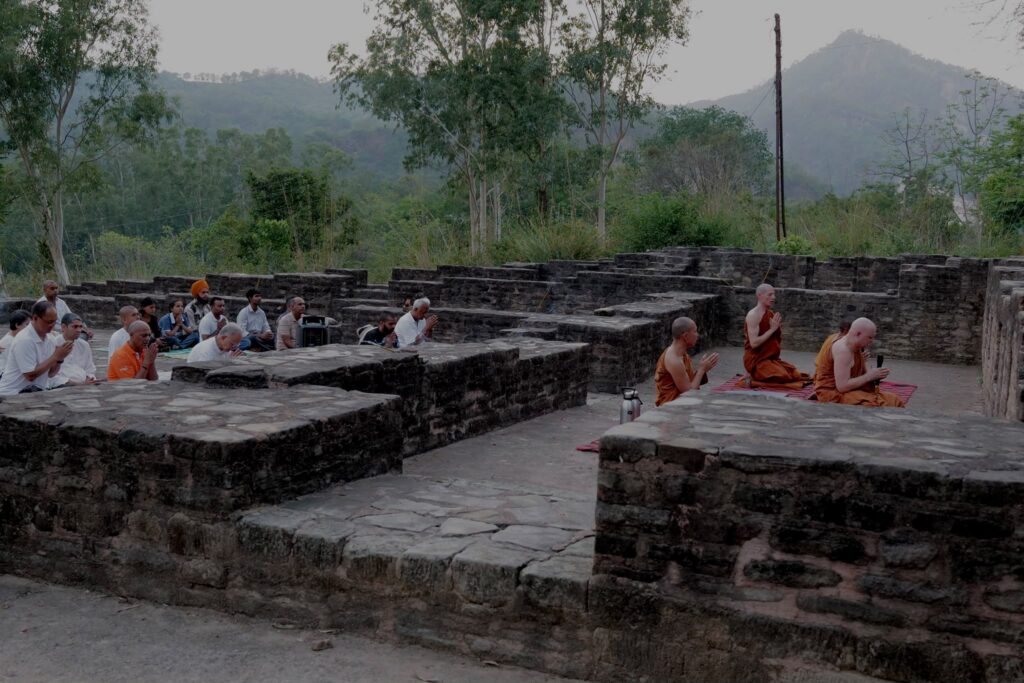
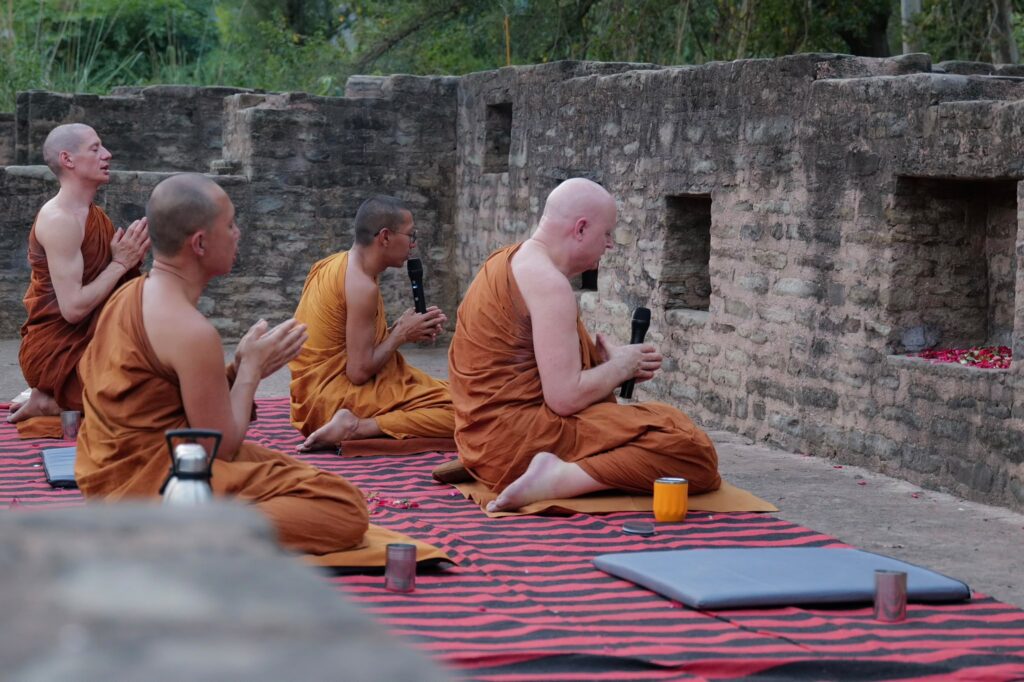
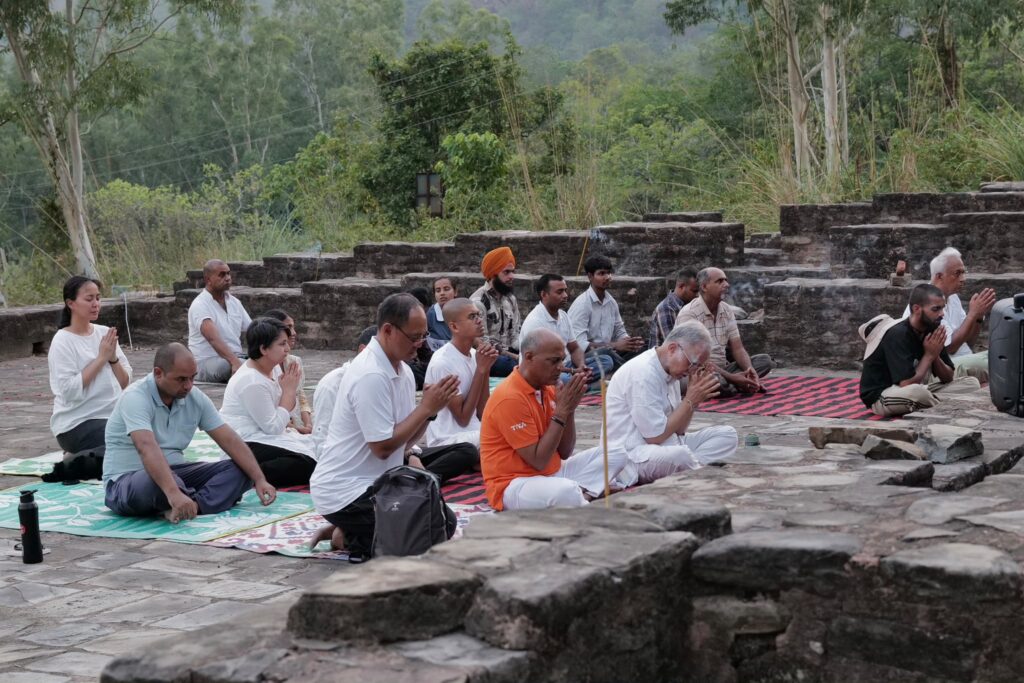
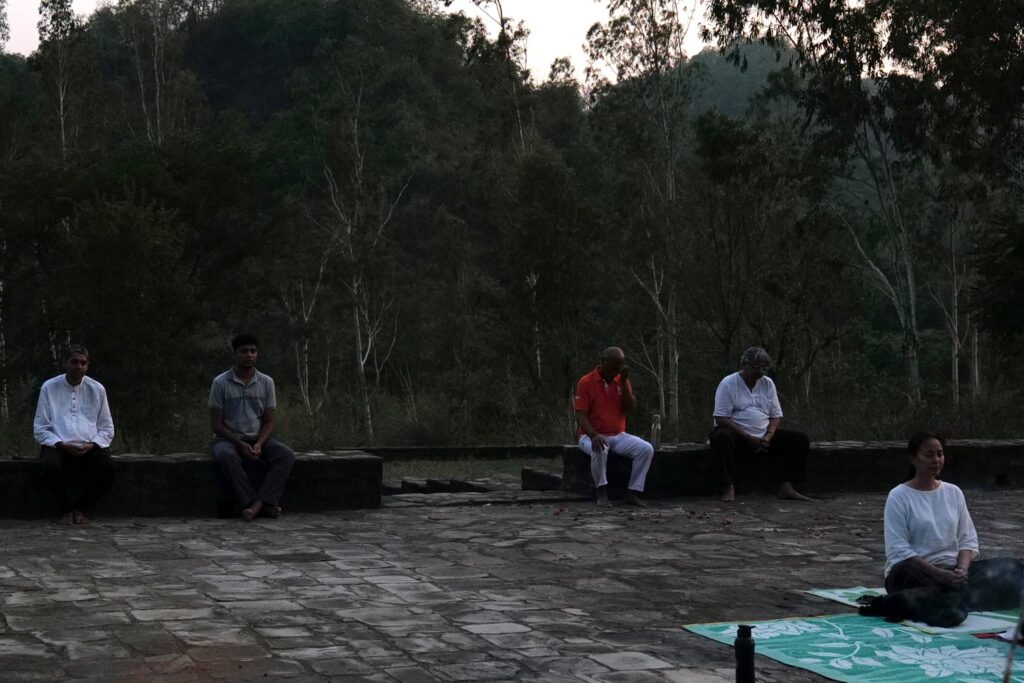
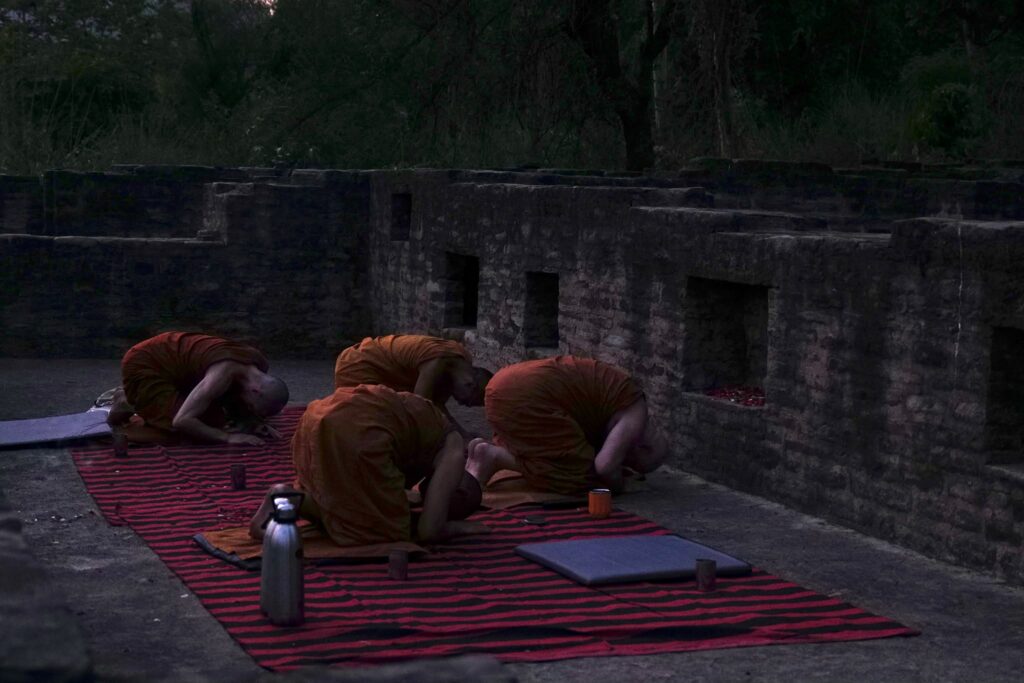
The community then gathered for the afternoon drink before travelling to the nearby ancient monastery site for the evening observance. In the peaceful atmosphere of this historic place, participants chanted the parittas and sat together in meditation as the sun slowly set.
Looking Ahead

The final morning began with a tour of the monastery grounds reviewing the monastery master plan, including a visit to the first kuti, which is now nearing completion.
Words of Encouragement

Before Ajahn Jayasaro’s departure, the community gathered to ask forgiveness in the traditional manner and to pay their respects.
In his concluding remarks, Ajahn Jayasaro expressed appreciation for the progress made at Arañña Saṅghārāma since his previous visit. He praised not only the development of the physical infrastructure but, more importantly, the growth of the community and the strengthening relationship between the Sangha and lay practitioners as well as the local village.
Reflecting on the significance of establishing a forest monastery in India, he spoke of the historic nature of the project and offered words of encouragement for the future, saying that he sees great potential ahead for the monastery and its role in supporting the flourishing of the Buddhas teachings in the land of their origin.
We are deeply grateful to Ajahn Jayasaro for his visit, guidance, and encouragement, and to all those whose generosity and service made this occasion possible
Explore More from Ajahn Jayasaro’s Visit
Watch the complete One Day Dhamma Sharing with Ajahn Jayasaro playlist
https://youtube.com/playlist?list=PLITJUDIaVDmg&si=mNDs5mfh0TglC8wa
Cool Hearts in the Summer Heat – June Dhamma Gathering in Chandigarh

Cool hearts, warm hospitality.
During the last weekend of June, Bhante Mahāpañño and Bhante Tissaro travelled to Chandigarh to join the monthly gathering that has continued to flourish since Luang Por Liem’s visit in February. This month’s programme was kindly hosted by Mamta Joshi and her family, whose warm hospitality provided a peaceful setting for the Sangha and the local community to come together.
Informal Meetings
Arriving on Saturday afternoon, the monks spent the evening meeting informally with members of the Chandigarh community. The relaxed atmosphere encouraged questions, discussion, and personal conversation about the opportunities and challenges of cultivating the Buddha’s path amidst the responsibilities of everyday life.
Dhamma Teachings
Around forty practitioners gathered on Sunday for a full day of practice, generosity, and Dhamma reflection. Bhante Sumanapriya of Ashok Buddh Vihar joined Bhante Mahāpañño and Bhante Tissaro, lending further support to the growing friendship between the two communities.
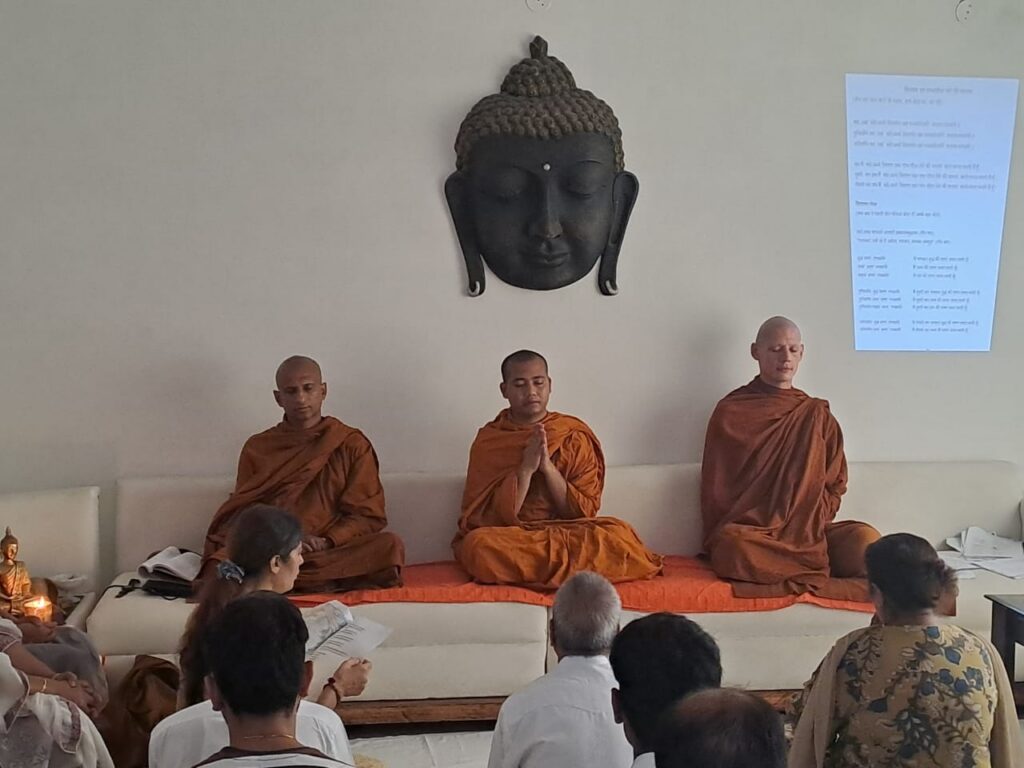
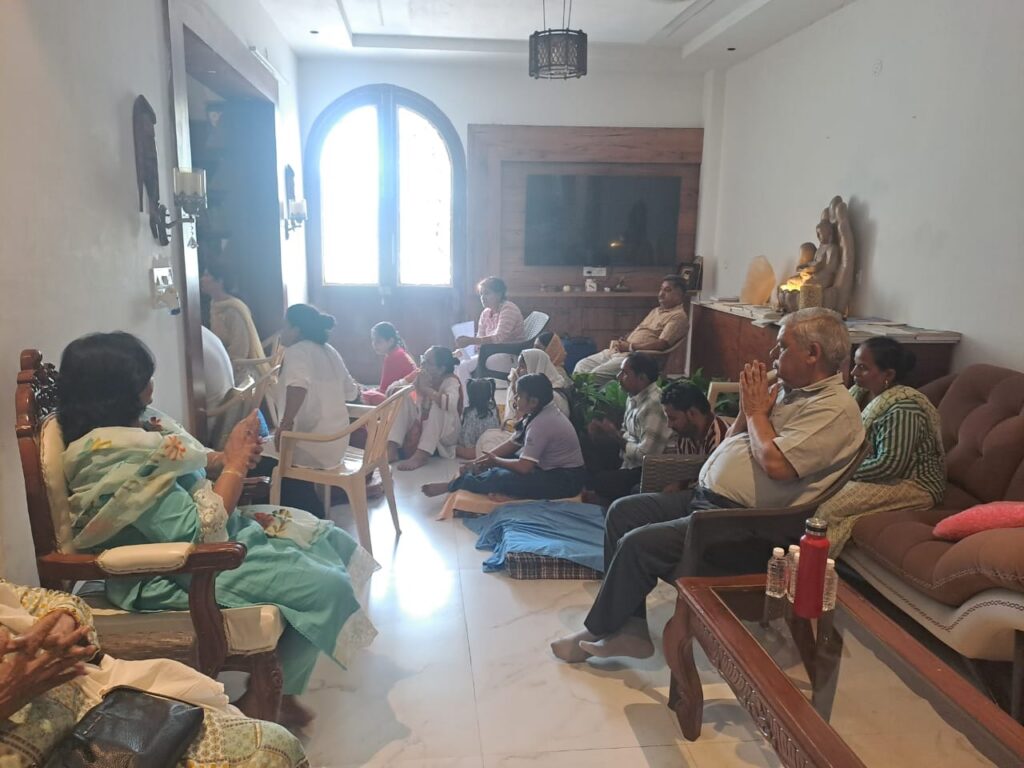
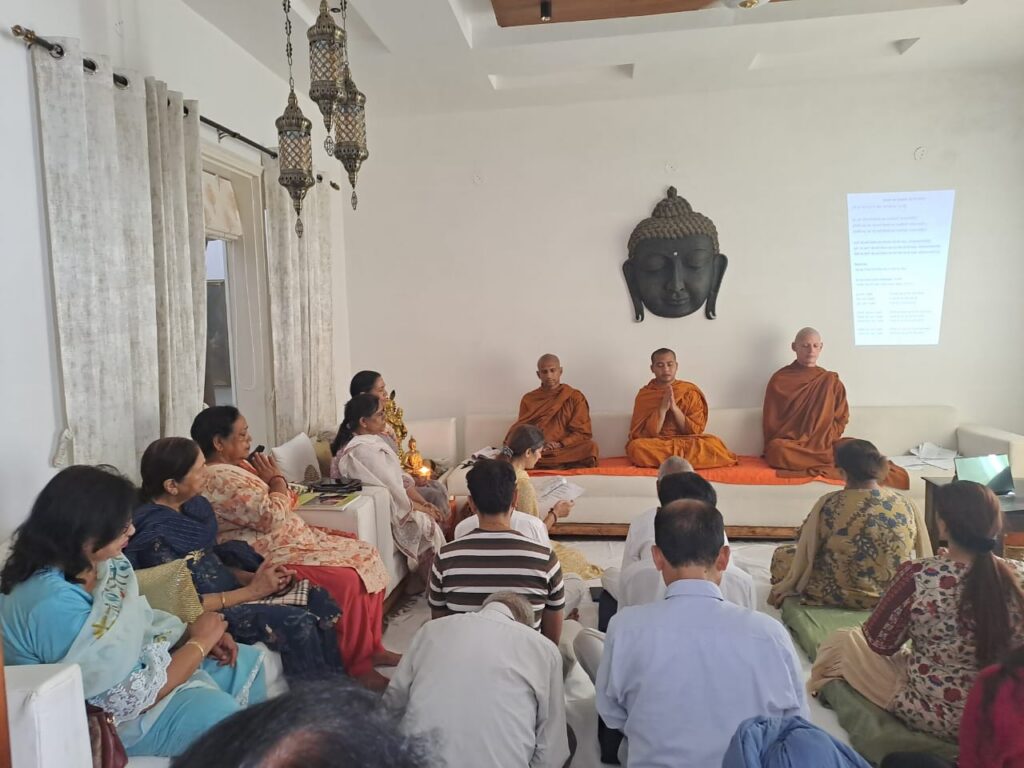
Learning, reflection, and shared practice.
The day opened with the chanting of the Karaṇīya Mettā Sutta in both Pāli and Hindi, led by Bhante Tissaro. The verses provided a natural point of departure for reflecting on the cultivation of mettā as one of the essential qualities supporting both meditation and daily life.
Particular emphasis was placed on approaching the practice with wisdom and creativity, rather than relying on a rigid formula or merely repeating phrases. By learning to recognise the conditions that give rise to genuine goodwill in different situations, practitioners can gradually cultivate a living quality of mettā that responds naturally to the changing circumstances of daily life.
Generosity and Reflection
The assembly then renewed its commitment to the Buddhist path by taking refuge in the Triple Gem and undertaking the Five Precepts under the guidance of Bhante Sumanapriya. This was followed by the traditional request for the Bhikkhu Sangha to receive the offering of Saṅghadāna, after which the lay community made generous offerings.
Watch a short glimpse of the Taking Refuge and Five Precepts ceremony during the Chandigarh gathering.
Reflecting Before the Meal

Before the meal, Bhante Sumanapriya led the chanting of thePaṭisaṅkhā Yoniso reflection, contemplating the wise use of almsfood—not for pleasure or indulgence, but simply to sustain the body as a vehicle for practice.
Though recited regularly by monastics, this reflection offers an equally valuable reminder for lay practitioners to approach the necessities of life with mindfulness, moderation, and gratitude.
Exploring the Five Khandhas


An interactive and thought-provoking Dhamma session.
After the meal, generously prepared and offered by the supporters, the group reconvened for an extended afternoon session led by Bhante Mahāpañño. Focusing on the Five Khandhas, he explored the Buddha’s teaching on the aggregates through practical examples and guided reflections drawn from ordinary experience. Rather than treating these teachings as abstract philosophy, the discussion illustrated how careful contemplation of body, feeling, perception, mental formations, and consciousness enables the mind to recognise their changing nature, gradually loosening attachment and reducing suffering.
The presentation developed into an engaging dialogue, with many thoughtful questions from those attending. Practical exercises and everyday examples helped demonstrate how these ancient teachings remain directly relevant to the challenges of modern life, offering skilful means for cultivating greater peace, wisdom, and freedom.
Continuing the Conversation
Although the formal programme concluded in the late afternoon, many participants chose to remain well into the evening, continuing their conversations with the monks in an atmosphere of warmth, curiosity, and shared commitment to the practice.

“जब मन और शरीर सकारात्मक सोच के साथ किसी सेवा में लग जाते हैं, तो शरीर एकदम हल्का महसूस करने लगता है। मैंने अनुभव किया कि सेवा करने से किसी तरह की थकान महसूस नहीं हुई। महापन्य भंते जी ने खंडों की जो परिभाषाएँ दीं, वे रोज़मर्रा की ज़िंदगी में घटने वाली चीज़ों से जुड़ी हुई थीं, और मुझे बहुत पसंद आईं.”
— Mamta Joshi
“On Sunday, the grace of saṅghadāna, combined with the serene presence of the bhikkhus, filled the gathering with a sense of genuine joy. Exploring the topic of Panchupadan Khanda with Mahāpaññā Bhante ji brought a profound clarity in me. The most powerful insight was understanding that every moment is just an experience arising. I leave with gratitude for your guidance, your compassion, and the stillness that made the Dhamma feel so alive.”
— Charu
Strengthening Connections
On Monday, Bhante Mahāpañño and Bhante Tissaro were invited to Ashoka Buddha Vihar for the day’s meal, where they were warmly welcomed by Bhante Sumanapriya, Bhante Pragyalok, and members of the monastery’s supporting community, including secretary Meenal Baruah.
The visit provided a valuable opportunity to discuss future collaboration between Arañña Sangharama and Ashoka Buddha Vihar.
With a shared aspiration to support the flourishing of the Buddha’s teachings in northern India, several ideas for future joint activities were explored, and we look forward with gratitude to seeing these connections continue to grow.
Visit of Thai Monastics and Lay Supporters from Bhogal Buddha Vihar, New Delhi


Visiting and Supporting
Visitors are warmly welcome to the monastery.
👉 Visitor Guidelines:
https://aranyavihara.in/visiting-aranya-sangharama/
If you would like to support the monastery in its Dhamma service, please see below:
🙏 Donations:
https://aranyavihara.in/donations/
🖼️ The Story Beyond Words


📸 Photo Credits:
Arañña Saṅghārāma Collection
🌐 Stay Connected
📘 Facebook: Aranya Vihara Trust
📸 Instagram: @aranyaviharatrust
📩 Email: aranyasangharma@gmail.com
▶️ YouTube: AVT Channel